The East Cleveland Oral History Project: 25 Interviews on Resilience and Pride
The East Cleveland Oral History Project offers 25 free interviews on East Cleveland history, from Shaw High School to faith, migration and ownership.
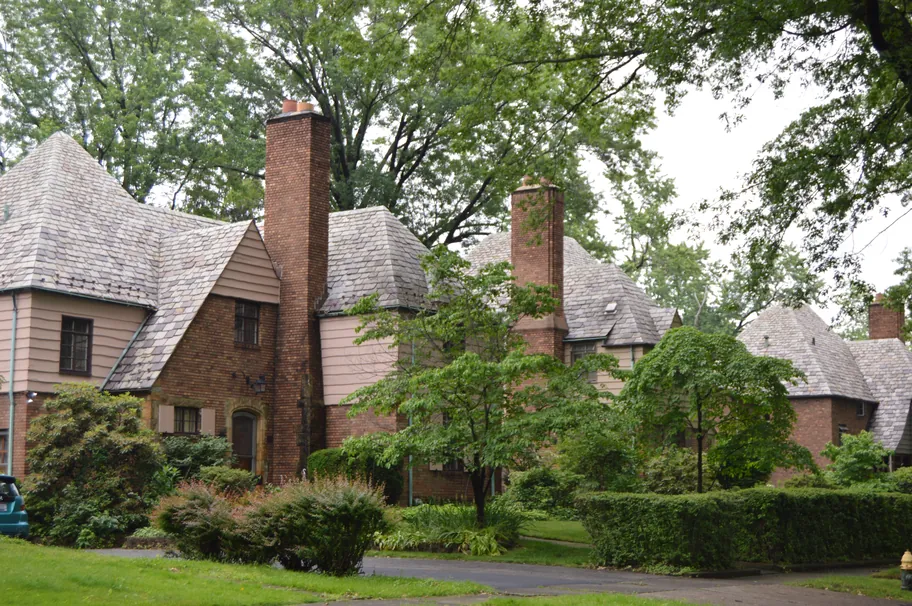
The East Cleveland Oral History Project is a collection of 25 recorded and transcribed interviews in which residents of East Cleveland, Ohio, tell the city’s history in their own words. The interviews are archived at Cleveland Voices, the free online oral history collection of the Cleveland State University Center for Public History + Digital Humanities, and they cover Shaw High School, the Great Migration, faith, small business, the public library, the arts and the work of rebuilding neighborhoods.
The project was directed by Dr. Nicholas S. Mays of Baldwin Wallace University in partnership with the Cuyahoga Land Bank, and Dr. Mays is listed as the interviewer. He also leads Mays HisToracle Consulting, which publishes this overview. What follows describes what the interviews contain, introduces some of the narrators, and explains how anyone can listen.
At a glance
- The East Cleveland collection on Cleveland Voices holds 25 transcribed interviews with 26 narrators, including one joint interview.
- Most were recorded between September and November 2025, and two items carry 2026 dates.
- The collection names its themes as education, migration, community development, faith, entrepreneurship and neighborhood revitalization.
- Every interview page offers the recording, a summary and a full transcript, free to anyone online.
- All Cleveland Voices interviews are shared under a Creative Commons BY-NC-SA license.
- The collection says it aims to widen public understanding of East Cleveland’s past beyond the familiar story of crisis and decline.
What is the East Cleveland Oral History Project?
According to the collection’s description, the project documents the lives, experiences and community work of East Cleveland residents, past and present, whose stories reflect the city’s resilience, civic engagement and cultural legacy. It emphasizes intergenerational perspectives, and the narrators span several generations, from a longtime resident who bought her East Cleveland home in 1975 to Shaw High School graduates of the 2000s.
The narrators include business owners, clergy, educators, librarians, artists, organizers and a journalist. Most interviews follow one person’s life from childhood to the present, so the collection reads as a set of overlapping portraits of the same city. For background on the city itself, from its incorporation to the present, see our history of East Cleveland, Ohio.
Why does Shaw High School run through so many interviews?
Shaw High School is the thread that ties the collection together. Danny Barnes, an East Cleveland native, describes his years at Shaw and recounts the origins of the first All Class Shaw Reunion in 2004, which he organized to reunite former students and strengthen ties to the city (Danny Barnes interview). Mike Tucker talks about his involvement in the Shaw Reunion Association and its scholarship work (Mike Tucker interview).
Kevin Salters, a lifelong resident, credits the school with shaping his life. “I learned a lot from Shaw. My children learned a lot from Shaw. And that’s why I still live in this community,” he said in his interview of October 14, 2025.
Younger graduates carry the same loyalty. India Moore-Harper and Seretha Etheridge, both Shaw class of 2006, recorded a joint interview about growing up in the city and staying connected to it as adults (interview). Dominique Kizer, class of 2009, returned to Shaw as a linkage coordinator and intervention specialist after teaching in New Orleans (interview), and Monique Davis describes teaching technology and computer science in the East Cleveland City School District (interview).
How do migration and family shape these stories?
Several of the oldest memories in the collection begin in the Jim Crow South. Mother Mary Hopper describes farming, school, church life and community support in rural South Carolina, a move to Baltimore in the mid-1950s, and her arrival in Cleveland in 1958, where she pursued higher education and a nursing career while raising children. She bought her East Cleveland home in 1975 and describes the decades of neighborhood change she has witnessed since (Mary Hopper interview).
Dr. MaryAnn Harris migrated from Georgia to Cleveland at age eight and describes overcoming childhood illiteracy on her way to a career as a teacher, gerontology coordinator, college instructor and librarian. She later served on the East Cleveland School Board and the East Cleveland Public Library Board of Trustees (MaryAnn Harris interview).
Stacy Clark-Warren, a 1981 Shaw graduate, traces her family’s migration from Alabama and Georgia to Ohio and explains how her parents’ East Cleveland home became a support center for relatives and friends moving north (Stacy Clark-Warren interview). These accounts belong to the larger story of the Great Migration to Cleveland, told from inside the families who made it.
What role do faith, service and organizing play?
Faith leaders and organizers describe the work of holding a community together. Bishop Darnell Jennings describes a calling to ministry that began in childhood, a dual career in behavioral health and faith leadership, and the challenges of pastoring in East Cleveland, including housing decline, community need and collaboration among local clergy. Asked about the positive forces in East Cleveland, he described what he calls a healthy pride among its people.
“They care about what they worked hard for. They care about what they’ve invested in. They care about family. They care about the next generation,” Jennings said in his interview of September 23, 2025.
Trevelle Harp, a community organizer, contrasts the vibrant city he remembers from childhood with the disinvestment he found during his college years. He describes his work with the Northeast Ohio Alliance for Hope on vacant properties, efforts to improve Patterson Park, community engagement around the closing of Huron Hospital, and resident leadership (Trevelle Harp interview). Paul Hill, Jr., who moved to East Cleveland in the early 1980s to raise his children, discusses federal work on school desegregation and civil rights compliance and his long tenure leading East End Neighborhood House (Paul Hill interview).
What do the interviews reveal about business and ownership?
Ownership is one of the collection’s strongest themes. Kevin Salters describes his path from the U.S. Army to welding to rehabilitating properties, building a rental portfolio with his family, and organizing 13 years of community block parties. Mike Kaplowitz, the second-generation owner of Bill Kap Piano Company, discusses the business his father started, the city’s economic changes and public perceptions of East Cleveland (Mike Kaplowitz interview).
Entrepreneur Angelina Bell describes founding Humble Mornings Coffee Company in 2021, sourcing beans from minority women farmers in South America and Africa, and her part in the new Maroon Square business incubator opening in East Cleveland (Angelina Bell interview). Danny Barnes and Pat Cook (Pat Cook interview) both remember the Black-owned businesses that shaped daily life when they were young, and Barnes closes his interview by stressing ownership, revitalization and civic participation as the keys to the city’s future.
How do the library, the arts and Millionaires’ Row appear?
The East Cleveland Public Library is a recurring presence. Carlos Latimer, an East Cleveland native and the library’s executive director, traces his path from Shaw High School to the Cleveland Public Library and a master’s degree in library science. He explains how the library’s mission has grown to include technology access, early literacy, performing arts and social services, and describes its role as a trusted institutional anchor (Carlos Latimer interview). Our history of the East Cleveland Public Library gives the longer background.
Sheila Hunt-Sharpley, whose family moved to East Cleveland in 1966, recalls the strong music, theater and arts education in the city’s schools from the 1960s through the 1980s. She serves as vice president of the library’s Board of Trustees, keeps an extensive collection of East Cleveland historical materials, and is restoring a historic Rockefeller-Rudd home that she hopes to turn into a museum and educational site (Sheila Hunt-Sharpley interview).
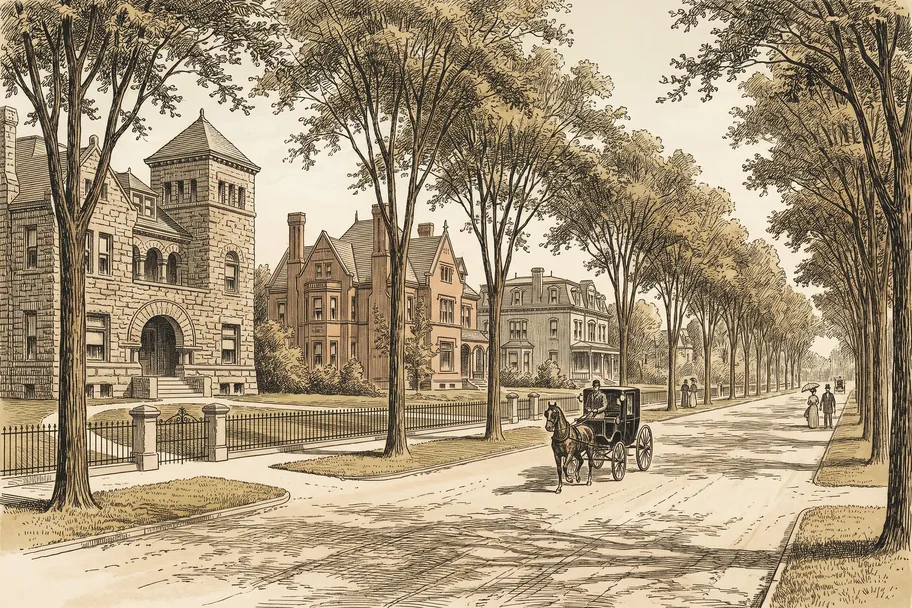
Dr. Joy Jordan describes her family’s long presence on East Cleveland’s Millionaires’ Row, including her father’s dental practice, the international house her family operated for students, community gatherings and civic organizing, and the historic property she later repurchased. She discusses her 31-year career as a dentist, her service on City Council and the School Board, and her family’s involvement in civil rights activism (Joy Jordan interview).
The artist Edward E. Parker, who came to Cleveland in the 1960s, discusses developing the Edward E. Parker Creative Arts Complex in East Cleveland, mentoring young artists, his travels to Africa and his sculpture (Edward Parker interview). Journalist Tyisha Blade, a 2006 Shaw graduate, describes founding The East Clevelander Magazine to highlight the achievements and contributions of East Cleveland residents (Tyisha Blade interview).
How does the project reframe East Cleveland beyond crisis and decline?
The hard facts of recent East Cleveland history are well documented. The Encyclopedia of Cleveland History reports that the city peaked at 40,047 residents in 1950, that blockbusting drove a rapid racial turnover in the 1960s, and that the city spent much of the period from the late 1980s through the 2010s in fiscal emergency. By 2018, it notes, about 17,000 people lived there, with a 42 percent poverty rate that ranked East Cleveland as the poorest municipality in Ohio.
The narrators do not deny that history. Harp speaks of disinvestment, Jennings of housing decline, and Jordan addresses past corruption. What the interviews add is everything a list of statistics leaves out: the reunions and block parties, the congregations and businesses, the library and arts complex, and the families who stayed, returned or chose East Cleveland on purpose.
The collection states this aim directly: it presents a community-centered account meant to widen public understanding of the city’s past beyond the familiar story of crisis and decline. Several narrators make the same argument in their own terms. Kaplowitz reflects on public perceptions of the city, Salters remarks that East Cleveland has an unfair reputation, and Blade describes her magazine as part of an effort to reshape public narratives about the place where she grew up.
How can you listen to the East Cleveland interviews?
Listening is free and takes only a few minutes to start.
- Open the collection. Go to the East Cleveland collection on Cleveland Voices and follow the link to browse its 25 interviews.
- Pick a narrator. Each interview page has a built-in player, a written summary and a full transcript, along with buttons to download, print or copy a citation.
- Read along. Each page pairs the recording with its transcript, which makes it easy to find a passage. Cleveland Voices notes that transcripts may contain errors, so check the audio before you quote.
- Find the archival record. The recordings are also held in EngagedScholarship@CSU, the university’s repository. The record for the Kaplowitz interview, for example, lists a running time of 47 minutes and offers the audio and caption files for download.
- Reuse responsibly. Interviews are shared under a Creative Commons BY-NC-SA license. Credit the narrator and the item page, and keep quotations in context.
Cleveland Voices also offers a reminder worth keeping: it encourages listeners to check the stories against additional research. Memory is a primary source like any other, and our guide to what oral history is explains how historians use it.
Why do these interviews matter now?
The narrators range from elders who remember the Jim Crow South to graduates who are now raising their own children and teaching in East Cleveland schools. Their recorded voices keep a record of the city as residents themselves understand it, available to students, journalists, planners and families across Cleveland and Cuyahoga County. Each year that passes makes recordings like these harder to gather.
Mays HisToracle Consulting, led by Nick Mays, Ph.D., designs and carries out oral history projects for communities, congregations and organizations that want their history told in their own voices.
Questions people ask
What is the East Cleveland Oral History Project?
It is a collection of 25 transcribed interviews with 26 East Cleveland residents, past and present, archived at Cleveland Voices by the Cleveland State University Center for Public History + Digital Humanities. Directed by Dr. Nicholas S. Mays of Baldwin Wallace University in partnership with the Cuyahoga Land Bank, it documents education, migration, community development, faith, entrepreneurship and neighborhood revitalization.
How can I listen to the interviews?
Open the East Cleveland collection on Cleveland Voices and choose a narrator. Each interview page has a built-in player, a written summary, a full transcript, and buttons to download, print or copy a citation. The site notes that transcripts may contain errors, so check the recording before quoting. The pages are free to use, and no account was needed to open them.
Can I quote or reuse the interviews?
Cleveland Voices makes all of its interviews available under a Creative Commons BY-NC-SA license, which allows noncommercial reuse with attribution, as long as adapted work is shared under the same terms. Credit the narrator, the interview date and the Cleveland Voices item page. The Oral History Association also asks users to avoid stereotypes and misrepresentation and to interpret each narrative in its proper context.
Why does this project matter for East Cleveland history?
Much of what is published about East Cleveland centers on population loss, fiscal emergency and disinvestment, which are real. These interviews add what residents built and kept going: schools, congregations, businesses, a library, reunions and block parties. The collection says its goal is to widen public understanding of the city’s past beyond the familiar story of crisis and decline.
Sources
- East Cleveland (25 transcribed interviews), Cleveland Voices, CSU Center for Public History + Digital Humanities.
- Terms & Policies, Cleveland Voices.
- Darnell Jennings interview, 23 September 2025, Cleveland Voices.
- Kevin Salters interview, 14 October 2025, Cleveland Voices.
- Mike Kaplowitz interview, 10 September 2025, EngagedScholarship@CSU, Cleveland State University.
- East Cleveland, Encyclopedia of Cleveland History, Case Western Reserve University.
- OHA Best Practices, Oral History Association.