What Is Oral History? A Historian’s Plain-Language Guide
Oral history is the planned, recorded and archived interview of people about their own past; here is what oral history is, with real oral history examples.
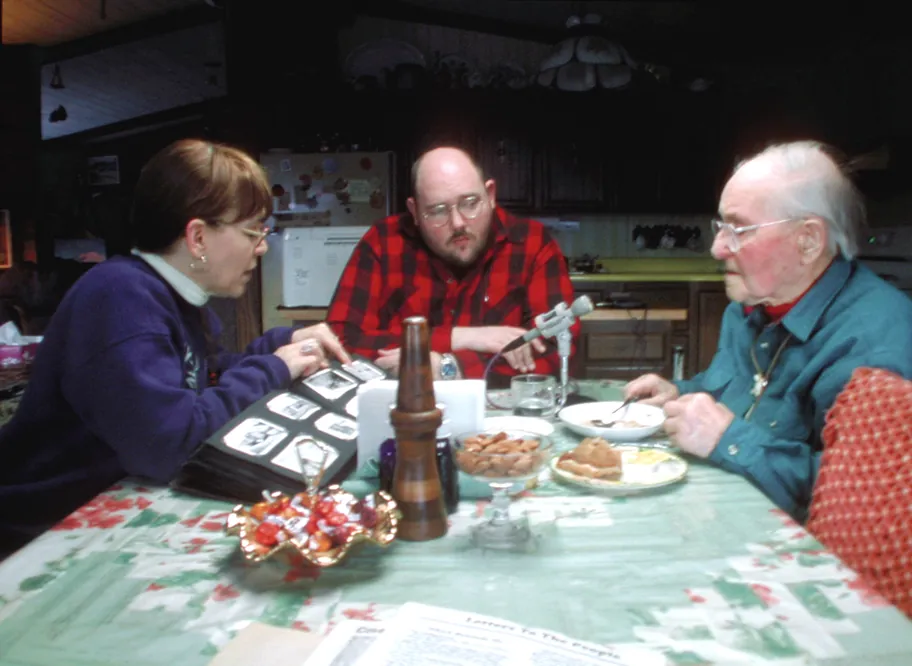
Oral history is a way of recording, preserving and interpreting the memories of people who lived through the past, in their own voices, through a planned interview. What separates it from an ordinary conversation is the work around the recording: research before the interview, the narrator’s informed consent, and an archive that keeps the recording and transcript so that others can learn from them.
This guide explains what oral history is in plain language, how historians use it, and where you can hear strong oral history examples, including a set of interviews recorded in East Cleveland, in Cuyahoga County, beginning in 2025.
At a glance
- The Oral History Association (OHA) defines oral history as “a field of study and a method of gathering, preserving, and interpreting the voices and memories of people, communities, and participants in past events.”
- The OHA calls it “the oldest type of historical inquiry,” rooted in oral traditions that predate the written word.
- Most interviews are either life histories, which follow one person’s life, or topical interviews about a particular subject or event.
- A signed release and a plan for preserving the recording are what turn an interview into a lasting historical source.
- Congress created the Veterans History Project at the Library of Congress in 2000 to collect the personal accounts of U.S. military veterans.
- In Cleveland, the Cleveland Voices archive at Cleveland State University has collected oral history interviews since 2002.
What is oral history, according to historians?
The OHA describes oral history as both a method and a field of study. The method is the recorded interview. The field is the body of practice, ethics and scholarship that has grown up around gathering, keeping and interpreting those interviews.
The practice is ancient. The OHA points out that people passed down knowledge by voice long before anyone wrote it down. What is modern is the recording, which has moved from wax cylinders to wire recorders, analog tape and today’s digital files.
The value of an interview, in the OHA’s words, lies largely in how it places people’s experiences within a larger social and historical context. A document can tell you that a factory closed. A former worker can tell you what the closing meant for a family, a church and a street.
How is an oral history different from an ordinary interview?
The OHA calls the hallmark of an oral history interview “a dynamic, collaborative relationship between the interviewer and the narrator.” The interviewer prepares questions from research. The narrator decides what is relevant, meaningful or appropriate to share, and so shapes the record as much as the interviewer does.
Consent is the second difference. Under the OHA’s guidance, narrators may decline any question, take a break, end the interview, or ask to restrict access or use a pseudonym. An interview goes into an archive only when that is legally and ethically feasible, and only with the written permission of both the interviewer and the narrator.
The third difference is purpose. An oral history is made to last. The OHA lists four key elements of the work: preparation, interviewing, preservation and access. A recording that sits on one phone, with no release and no description, has skipped the last two.
What kinds of oral history interviews are there?
The OHA describes two broad kinds. A life history interview follows a narrator from childhood forward and lets the larger story emerge from one life. A topical interview selects narrators for what they know about a particular subject or event, such as a strike, a congregation, a school or a neighborhood.
Many family interviews are life histories, and they are the easiest place to start. Our guide to questions to ask your grandparents covers that kind of conversation. Community projects tend to combine both kinds, with a shared theme and many narrators, which is the subject of our step-by-step guide to planning a community oral history project.
What are some well-known oral history examples?
The Veterans History Project. Congress created the project in 2000 as part of the American Folklife Center at the Library of Congress, to collect and preserve the accounts of U.S. military veterans and Gold Star families. Its field kit lets any interviewer aged 15 or older contribute, and it requires signed release forms before the Library can keep a collection.
StoryCorps. Since its founding in 2003, StoryCorps says it has helped more than 750,000 people record conversations about their lives. Those recordings are collected in the Library of Congress and in the organization’s online archive.
Cleveland Voices. The Cleveland State University Center for Public History + Digital Humanities has collected oral history interviews since 2002 and publishes them online at Cleveland Voices under a Creative Commons license. Anyone can listen and read the transcripts for free.
The East Cleveland Oral History Project. Its 25 transcribed interviews, most recorded in 2025 and all archived in Cleveland Voices, document residents’ memories of education, migration, faith, entrepreneurship, community development and neighborhood revitalization. You can read about the people and themes in our overview of the East Cleveland Oral History Project.
Can you trust what people remember?
Memory is not a recording. People forget, compress and reinterpret, and two narrators can remember the same event differently. Historians treat an oral history as a primary source like any other: valuable, personal and in need of comparison with other evidence.
Cleveland Voices makes the point in its site footer, where listeners “are encouraged to verify stories through additional research.” The OHA asks people who use interviews to put excerpts in context, avoid stereotypes, and cite the full oral history rather than a single line lifted from it.
What memory offers, and what documents rarely do, is meaning. An interview shows how an event felt, what people believed at the time, and how a community explains its own past. That is why oral history sits at the center of much public history work.
What happens to an oral history after the interview?
Good practice continues well after the recorder stops. The OHA’s best practices call for a signed release, ideally at the end of the interview, and for keeping redundant copies of the recording in different physical locations, in formats that do not depend on one company’s software.
Most archives also want a written record. The National Park Service estimates that transcribing one hour of interview takes six to eight hours, and it suggests a timed index or an abstract when a full transcript is out of reach. Narrators should know that once an interview is public, it may not be possible to remove it completely, which is one more reason to settle permissions before anything is shared.
Why does oral history matter now?
Every year, people who remember the middle of the twentieth century, the Great Migration, the civil rights era and the decline and rebuilding of American cities grow fewer. Their memories hold details that rarely reach a newspaper or a census form. Oral history lets communities, in Cleveland and Cuyahoga County as anywhere, describe their own past in their own voices, on their own terms, for anyone who listens later.
Mays HisToracle Consulting designs and carries out oral history projects for families, congregations, schools and community organizations, from the first plan to the archive.
Questions people ask
Who owns an oral history interview?
The Oral History Association tells narrators that they own the words they speak until they sign an agreement saying otherwise. That agreement, usually called a legal release, may transfer copyright to the historian or the archive, place the interview in the public domain, or license it under Creative Commons. In many projects the interviewer signs a release too, and narrators should always ask for a copy of anything they sign.
How long is an oral history interview?
There is no single standard length. The Oral History Association advises interviewers and narrators to agree on the length of the session ahead of time and to schedule more than one session if needed. The Library of Congress Veterans History Project asks for recordings of at least 30 minutes. One Cleveland Voices interview with a local business owner, for example, runs 47 minutes.
Does an oral history have to be transcribed?
Not always, but a written record makes an interview far easier to use. The National Park Service notes that transcribing one hour of recorded interview takes six to eight hours on average, and suggests a timed index or a short abstract as alternatives. Transcripts made with voice recognition software save time, but every one must be reviewed for accuracy against the recording.
Where can I listen to oral histories from Cleveland?
Cleveland Voices, a free online archive from the Cleveland State University Center for Public History + Digital Humanities, holds oral history interviews the center has collected since 2002. Its East Cleveland collection contains 25 transcribed interviews, most recorded in 2025, for the East Cleveland Oral History Project. Each interview page offers the recording, captions and a full transcript that anyone can read online.
Sources
- Oral History: Defined, Oral History Association.
- OHA Best Practices, Oral History Association.
- For Participants in Oral History Interviews, Oral History Association.
- Veterans History Project Field Kit, Library of Congress, American Folklife Center.
- About StoryCorps, StoryCorps.
- Oral History Resources: Interview Transcribing, National Park Service.
- East Cleveland (25 transcribed interviews), Cleveland Voices, CSU Center for Public History + Digital Humanities.