What Is Public History, and What Does a Public Historian Do?
Public history is history put to work in the world; here is what public history is, what a public historian does, and where public historians work.
Public history is history put to work in the world: research, interpretation and storytelling carried out with and for the public, beyond the walls of the traditional classroom. A public historian does that work in museums, archives, historical societies, government offices, community organizations, media and consulting, often in close partnership with the people whose past is being told.
That short answer comes from the field’s own definition. This guide explains what public history is according to the National Council on Public History, what a public historian does, where public historians work, how the field differs from academic history, and what public history looks like in Cleveland and Cuyahoga County.
At a glance
- The National Council on Public History (NCPH) says public history “describes the many and diverse ways in which history is put to work in the world.”
- NCPH traces the public history movement to the United States and Canada in the 1970s. Its journal, The Public Historian, has published since 1978.
- NCPH’s list of public historians includes “historical consultants, museum professionals, government historians, archivists, oral historians, cultural resource managers, curators, film and media producers, historical interpreters, historic preservationists, policy advisers, local historians, and community activists.”
- The U.S. Bureau of Labor Statistics counted about 3,800 jobs for historians in 2025. The largest employer group was professional, scientific and technical services, at 24 percent.
- Collaboration sits at the center. NCPH notes that some practitioners consider it “a fundamental and defining characteristic” of the field.
- In Cleveland, the Western Reserve Historical Society, founded in 1867, is “Cleveland’s oldest existing cultural institution,” according to the Encyclopedia of Cleveland History.
What is public history? The NCPH definition
NCPH’s definition is deliberately broad. Public history, it says, “describes the many and diverse ways in which history is put to work in the world. In this sense, it is history that is applied to real-world issues.” For many years, NCPH notes, practitioners also used “applied history” as a synonym.
The phrase “put to work” carries the meaning. Public history is defined less by its subject than by its purpose and its audience. The same research skills that produce a dissertation can produce a museum exhibit, a walking tour, a documentary, a preservation study or a policy brief.
NCPH is equally clear that “all good public history rests on sound scholarship.” Public history is not a lighter form of history. It is the same discipline, held to the same standards of evidence, and asked to serve people beyond the academy.
What does a public historian do?
A public historian researches the past and then makes it usable for a specific audience. The work takes many forms:
- Researching and writing an institutional history. NCPH cites a historical consultant writing a history for a business as a typical example.
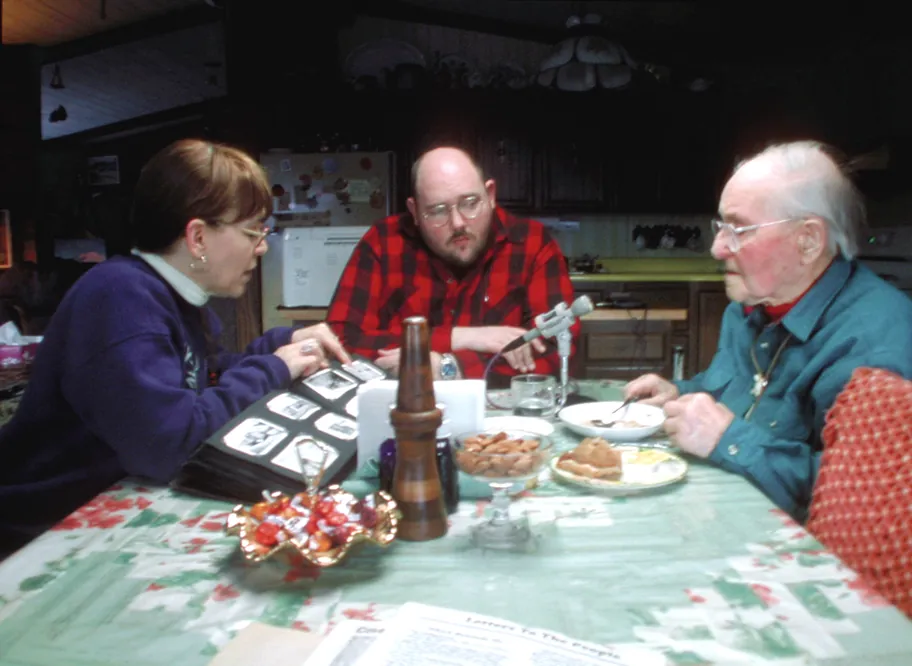
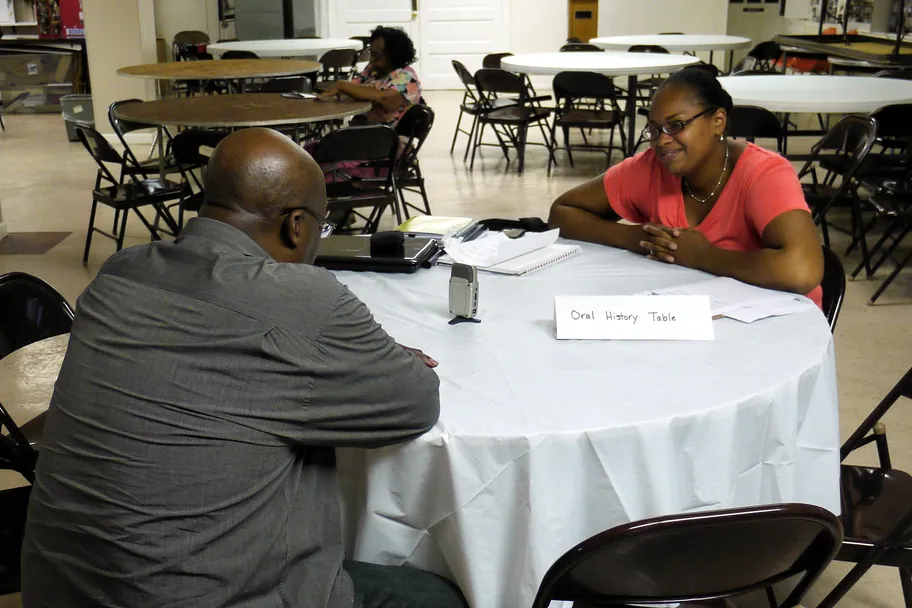
- Designing and conducting oral history interviews, then archiving them so that others can use them.
- Curating exhibits and interpreting historic sites for visitors.
- Advising governments on preservation, commemoration and policy.
- Producing films, websites and other media. NCPH lists film and media producers among public historians.
The common thread is collaboration. NCPH observes that “public historians routinely engage in collaborative work,” and that some practitioners consider collaboration “a fundamental and defining characteristic” of public history. NCPH’s account of the field uses the phrase “shared authority” for this partnership between historians and the communities they work with.
That is why the question “what does a public historian do” rarely has a one-line answer. On a given project, the same person may be researcher, interviewer, writer, facilitator and editor.
Where do public historians work?
The Bureau of Labor Statistics puts it simply: “Historians work in museums, archives, historical societies, and research organizations. Some work as consultants.” In its count of historians, the largest employers in 2025 were professional, scientific and technical services (24 percent), the federal government (20 percent), local government (19 percent) and state government (14 percent).
Those numbers describe one occupation. NCPH’s broader list adds curators, archivists, preservationists, interpreters, filmmakers, policy advisers and community activists, many of whom never hold the job title “historian.” Public history, in other words, is a practice that runs through many professions.
For organizations, that practice is often available by the project. A congregation, company or agency that needs historical research for a single purpose can engage a consultant rather than hire staff. Our guide on when to hire a historical consultant explains how that decision usually works.
How is public history different from academic history?
The difference is less about method than about audience and partnership. Both start with the same work: finding sources, testing them against each other and building an account from evidence. NCPH describes public history as history practiced “beyond the walls of the traditional classroom.”
In broad terms, an academic monograph is written mainly for other historians and students. A public history project is shaped from the start by the people who will use it: a congregation, a neighborhood, a museum visitor, a city agency or a client. The project’s questions, form and timeline come from that partnership.
The standards do not change when the audience does. NCPH’s insistence on “sound scholarship” means a public historian owes readers the same accuracy, the same honesty about gaps in the record, and the same care with sources that any scholar does.
Why are oral history and community history central to public history?
Oral history is one of the field’s core methods. The Oral History Association defines it as “a field of study and a method of gathering, preserving, and interpreting the voices and memories of people, communities, and participants in past events.” It adds that “the hallmark of an oral history interview is a dynamic, collaborative relationship between the interviewer and the narrator.” For a fuller introduction, see what is oral history.
Community history is the other pillar. NCPH’s own example of public history in action is “a local non-profit organizes a community oral history project that provides research for an historic walking tour.” The people who lived the history help decide what is asked, what is recorded and how it is shared. Our guide on how to plan a community oral history project walks through that process step by step.
This is where public history most clearly differs from writing about a community from the outside. Communities are collaborators, not subjects.
What are examples of public history in Cleveland?
Cleveland and Cuyahoga County offer clear examples of the field at work.
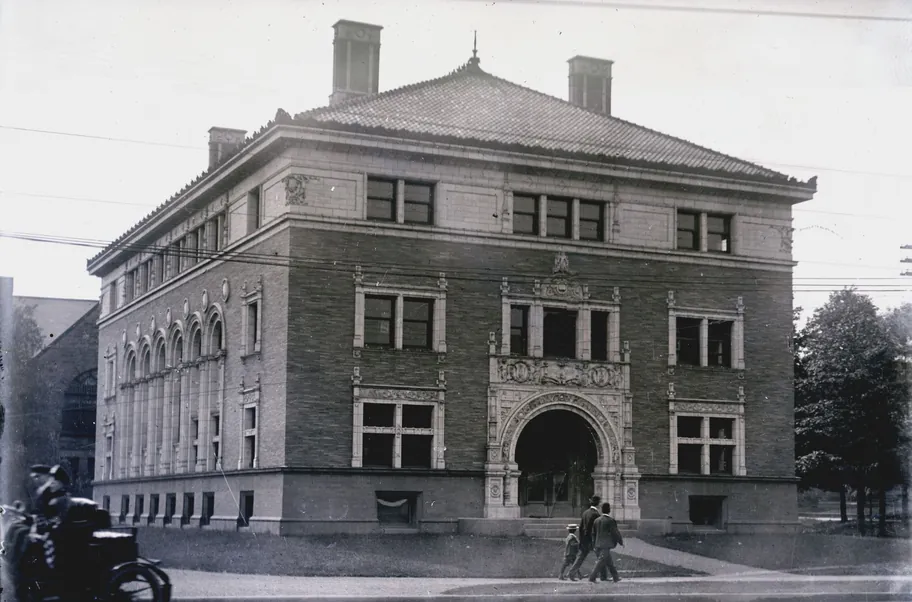
- The Western Reserve Historical Society (WRHS). Founded in 1867 to preserve the history of Cleveland, the Western Reserve and Ohio, it moved in 1898 to the building shown above. In the late 1960s its library began collecting urban, African American, ethnic, Jewish, labor and gay and lesbian history.
- The Center for Public History + Digital Humanities at Cleveland State University. Formed in 2007, the center runs Cleveland Historical, Cleveland Voices, Green Book Cleveland and Queer Cleveland. Cleveland Voices holds oral history interviews collected since 2002.
- The Encyclopedia of Cleveland History. Produced through the history department at Case Western Reserve University, it was printed in 1987 and 1996 and now lives online as a public reference.
- The East Cleveland Oral History Project. Its interviews were conducted mostly in 2025, directed by Dr. Nicholas S. Mays of Baldwin Wallace University in partnership with the Cuyahoga Land Bank. The 25 transcribed interviews are archived in Cleveland Voices. Read more about the East Cleveland Oral History Project.
Each example pairs scholarship with public access, and each puts the region’s past where residents can reach it.
Why public history matters now
Every neighborhood, congregation and institution is making decisions about what to keep, what to rebuild and how to explain itself. Public history brings evidence and many voices into those decisions, so that the story a place tells about itself rests on the record and on the memories of the people who lived it.
Mays HisToracle Consulting does this kind of public history work with nonprofits, companies, government agencies and community institutions, from historical research to oral history project design.
Questions people ask
Is public history the same as applied history?
Largely, yes. The National Council on Public History notes that the term applied history was long used as a synonym, and it describes public history as history that is applied to real-world issues. Both names point to the same idea: careful historical research and interpretation carried out for a purpose and an audience beyond the traditional classroom, from a museum exhibit to a preservation study or a community oral history.
What education does a public historian need?
The U.S. Bureau of Labor Statistics reports that historians typically need a master’s degree to enter the occupation. Public history also calls for skills beyond research, such as interviewing, exhibit and media work, and community partnership. That breadth is why the National Council on Public History’s own list of practitioners runs from government historians, archivists and curators to local historians and community activists.
How many historians work in the United States?
The Bureau of Labor Statistics counted about 3,800 jobs for historians in 2025, with a median annual wage of $76,750 in May 2025 and projected growth of 3 percent from 2025 to 2035. That figure covers the historian occupation only. The National Council on Public History counts curators, archivists, preservationists, interpreters and media producers as public historians too, and those jobs carry other titles.
What is the National Council on Public History?
The National Council on Public History (NCPH) grew up alongside the field it serves. It held its first annual meeting in 1979 in Montecito, California, and was incorporated in the District of Columbia on May 2, 1980. NCPH describes itself as dedicated to making the past useful in the present and to encouraging collaboration between historians and their publics, and it sponsors the journal The Public Historian.
Sources
- About the Field, National Council on Public History.
- Our History, National Council on Public History.
- Who We Are, National Council on Public History.
- About The Public Historian, University of California Press.
- Occupational Outlook Handbook: Historians, U.S. Bureau of Labor Statistics.
- Oral History: Defined, Oral History Association.
- Western Reserve Historical Society, Encyclopedia of Cleveland History, Case Western Reserve University.
- About Cleveland Historical, Center for Public History + Digital Humanities, Cleveland State University.
- East Cleveland (collection), Cleveland Voices, Cleveland State University.
- About the Encyclopedia of Cleveland History, Case Western Reserve University.