The East Cleveland Public Library: A Carnegie Library and Its Community
The East Cleveland Public Library is a Carnegie library on Euclid Avenue, opened in 1916 with a $35,000 grant and expanded in 2005 for its community.
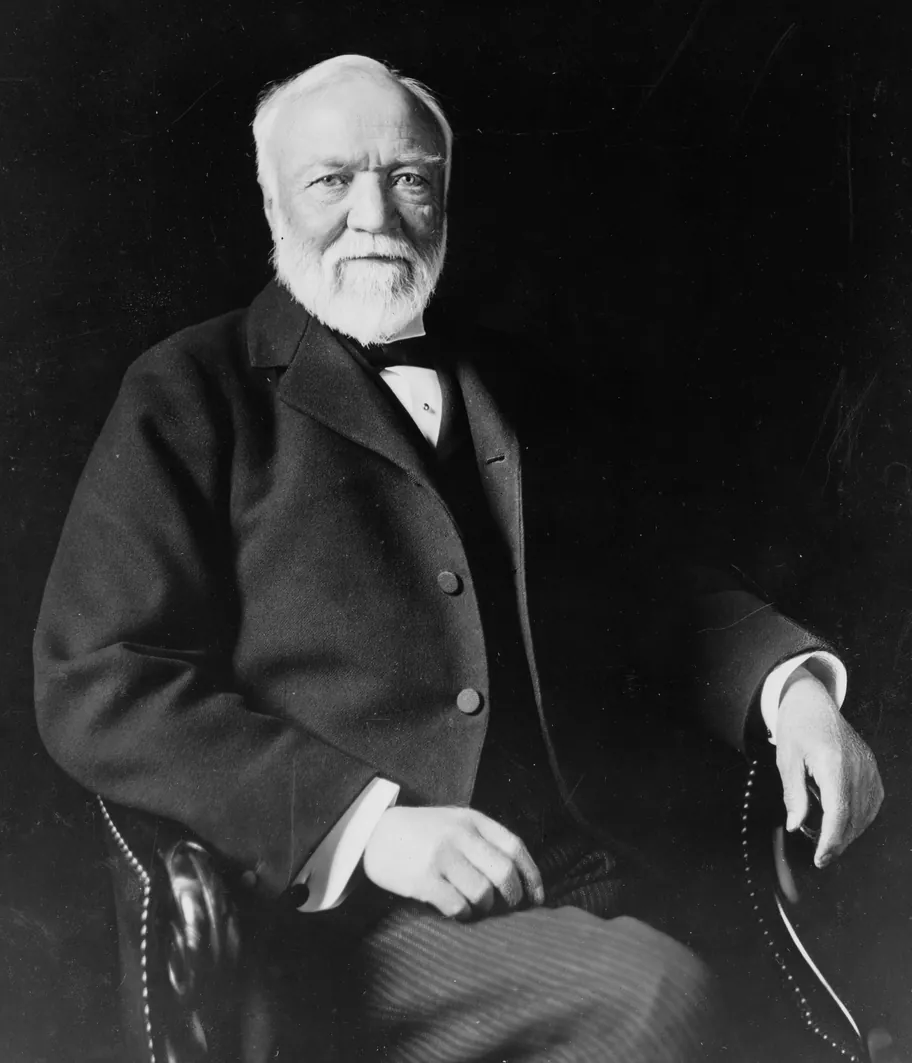
The East Cleveland Public Library is a Carnegie library at 14101 Euclid Avenue in East Cleveland, Ohio, built with a $35,000 contribution from the Carnegie Corporation of New York and officially opened on May 29, 1916. More than a century later it is still the city’s public library, expanded in 2005 with a learning center and a performing arts center, and it serves East Cleveland residents and the East Cleveland School District.
This history draws on the library’s own published account, the Ohio Historical Marker at the building, the Carnegie foundation’s record of its library program and the Encyclopedia of Cleveland History. Where the sources leave a question open, we say so.
At a glance
- The library’s board met on November 12, 1913, while plans for a new library were underway.
- The Carnegie Corporation of New York contributed $35,000 toward the building, and John D. Rockefeller contributed $3,600 to buy land for future expansion.
- The library officially opened on May 29, 1916, and marks the date each year with a Founder’s Day event at the end of May.
- A 2005 expansion added the Debra Ann November Learning Center and the Greg L. Reese Performing Arts Center.
- Branches on Caledonia Avenue and Hayden Avenue closed in 2010, and the library is now a single-facility system.
- Ohio Historical Marker 112-18 commemorates the library at its Euclid Avenue address.
How was the East Cleveland Public Library founded?
The library took shape in the first years after East Cleveland became a city in 1911. On November 12, 1913, the board of the East Cleveland Public Library met in the office of the East Cleveland Board of Education, where, the library reports, plans for a new library were underway.
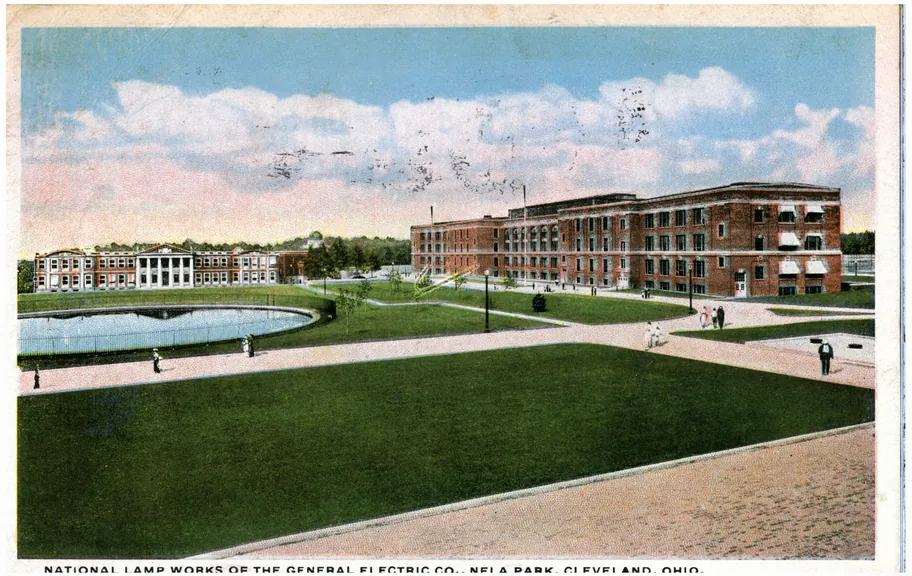
Three gifts helped build it. The Carnegie Corporation of New York contributed $35,000 toward the cost of the building. John D. Rockefeller, whose Forest Hill summer estate lay in East Cleveland, contributed $3,600 to buy land for the library’s future expansion, and the Encyclopedia of Cleveland History notes more broadly that the Rockefellers contributed land for the library. The National Electric Lamp Association, which had begun building Nela Park on Noble Road in 1911, donated 129 light bulbs for the building’s fixtures.
The library officially opened on May 29, 1916. Ohio Historical Marker 112-18, whose sponsors include the Friends of the East Cleveland Public Library and the Ohio Historical Society, describes it as “an original Carnegie Library dedicated in 1916.” The library still celebrates its founding with a Founder’s Day event at the end of May.
What made it a Carnegie library?
A Carnegie library is one built with a grant from Andrew Carnegie or from the foundation he created. According to that foundation, Carnegie and later his foundation gave some $56 million, starting in 1881, to build 2,509 public libraries, and 1,681 of them were built in the United States. Counting only the United States, the foundation reports more than $40 million for 1,681 public library buildings in 1,412 communities.
Carnegie attached a condition to these gifts: the libraries had to be maintained by the communities they served. The grant paid for a building, and the town was expected to keep it open, staffed and stocked.
Timing places East Cleveland’s library near the end of that story. Carnegie established the Carnegie Corporation of New York in 1911, and it gave its final grants for library buildings in 1917, because of a shortage of materials and workers during the First World War. East Cleveland’s library opened one year before those last grants. The foundation changed its name to the Andrew Carnegie Foundation in 2026, so newer references may use that name.
The sources consulted for this article do not name the architect of the 1916 building. Board minutes, building permits and newspaper coverage from 1913 to 1916 would be the places to settle that question.
How has the library changed since 1916?
The library reports that its main building has been renovated and expanded a number of times in its more than 100 years, most notably in 2005. That expansion added the Debra Ann November Learning Center and the Greg L. Reese Performing Arts Center.
The library also ran branches. Its system included the Caledonia branch at 960 Caledonia Avenue and the North branch at 1425 Hayden Avenue, but both closed in 2010 following the recession. Those closings came during a long, hard period for the city, whose population loss and fiscal crisis are covered in our short history of East Cleveland. Today the library is a single-facility system that, in its own words, continues to serve the East Cleveland School District, residents of East Cleveland and beyond.
What is the Greg L. Reese Performing Arts Center?
Gregory L. Reese has organized concerts at the library since 1985, beginning in its Lower Auditorium in collaboration with Tri-C JazzFest Cleveland. He served as deputy director from 1985 to 1988 and as executive director from 1988 to 2010, and he returned in 2018 as artistic director of the performing arts center that bears his name. The center was added in 2005 with support from the Cleveland Foundation. It holds 243 people and offers free monthly musical performances.
The library quotes Reese on the purpose of the series: “We wanted to bring quality entertainment to the city so everyone could enjoy the arts.” On January 11, 2026, the Cleveland Orchestra recognized the center with its Dr. Martin Luther King Jr. 2026 Service in the Arts Award at the orchestra’s 46th annual Martin Luther King Jr. Celebration Concert.
What can researchers find at the library?
For anyone researching East Cleveland, the library offers more than a lending collection. It maintains the Icabod Flewellen Collection, with a Flewellen Room and a published finding aid. Flewellen, born on July 6, 1916, in Williamson, West Virginia, founded the museum that took the name African American Museum in 1987. The Encyclopedia of Cleveland History describes that museum as “the first independent nonprofit African American museum established in the U.S.”
The library’s website also lists Shaw High School yearbooks for selected years between 1917 and 1992, a practical starting point for family historians. Our guides to researching the history of a house and to the archives and newspapers for Cleveland history explain how to combine sources like these with deeds, city directories and newspapers.
How does the library serve East Cleveland today?
The library’s mission statement commits it to library services and cultural activities that reflect the needs of the East Cleveland community. Its website lists practical services alongside books and databases, including passport services, a notary, meeting rooms, internet access, a creative print center and a library digital navigator.
The library also appears in the community’s own account of its history. In 2025 the East Cleveland Oral History Project, directed by Dr. Nicholas S. Mays in partnership with the Cuyahoga Land Bank, recorded 25 interviews with residents past and present, and the East Cleveland Public Library is among the subjects listed for the collection in Cleveland Voices. Read more about the East Cleveland Oral History Project.
Why does the East Cleveland Public Library’s history matter now?
The East Cleveland Public Library records a moment when a young city, a national philanthropy and local donors invested together in free public reading, and it has kept that investment working through branch closings and decades of change. Its concerts, collections and services show what a neighborhood institution can hold onto, and its records are part of the evidence for any future history of East Cleveland.
Mays HisToracle Consulting helps libraries, schools and community institutions research and document their own histories.
Questions people ask
When did the East Cleveland Public Library open?
The East Cleveland Public Library officially opened on May 29, 1916, at 14101 Euclid Avenue. Its board had met on November 12, 1913, while plans for a new library were underway. The library marks the opening each year with a Founder’s Day event at the end of May, and the Ohio Historical Marker at the building calls it an original Carnegie library dedicated in 1916.
Is the East Cleveland Public Library a Carnegie library?
Yes. The Carnegie Corporation of New York contributed $35,000 toward the cost of the building, and the Ohio Historical Marker at the site describes it as an original Carnegie library dedicated in 1916. Carnegie and his foundation funded 1,681 public library buildings in the United States, and the foundation made its final library building grants in 1917, the year after East Cleveland’s library opened.
Does the East Cleveland Public Library have branches?
Not anymore. The library once operated the Caledonia branch at 960 Caledonia Avenue and the North branch at 1425 Hayden Avenue, but both closed in 2010 following the recession, according to the library’s published history. Today it is a single-facility system at 14101 Euclid Avenue serving East Cleveland residents, the East Cleveland School District and patrons from beyond the city.
What is the Greg L. Reese Performing Arts Center?
It is the performance hall at the East Cleveland Public Library, added in 2005 with support from the Cleveland Foundation and named for Gregory L. Reese, the library’s former executive director, who began organizing concerts there in 1985. It holds 243 people and offers free monthly musical performances. In January 2026 the Cleveland Orchestra honored it with its Dr. Martin Luther King Jr. Service in the Arts Award.
Sources
- History of the library, East Cleveland Public Library.
- Ohio Historical Marker 112-18, East Cleveland Public Library, Remarkable Ohio, Ohio History Connection.
- Andrew Carnegie's Library Legacy: A Timeline, Andrew Carnegie Foundation (formerly Carnegie Corporation of New York).
- History, Andrew Carnegie Foundation (formerly Carnegie Corporation of New York).
- The Greg L. Reese Performing Arts Center, East Cleveland Public Library.
- Icabod Flewellen Collection, East Cleveland Public Library.
- Shaw High School Yearbooks, East Cleveland Public Library.
- East Cleveland, Encyclopedia of Cleveland History, Case Western Reserve University.
- African American Museum, Encyclopedia of Cleveland History, Case Western Reserve University.
- East Cleveland (25 transcribed interviews), Cleveland Voices, CSU Center for Public History + Digital Humanities.