How to Write a Church History Book for Your Congregation’s Anniversary
A church history book needs a year of lead time, a history committee, the church’s own records, elders’ oral histories and photo permissions; here is how.
To write a church history book, start at least a year before the anniversary, form a small history committee, and gather the congregation’s own records: annual reports, minutes, bulletins, photographs, membership rolls and the memories of its elders. Then organize the story around the church’s turning points, review drafts with longtime members, secure permission for every photograph and interview, and leave real time for design and printing.
This guide explains how to write a church history step by step, the way a historian would approach it. It draws on guidance from the Presbyterian Historical Society, the Oral History Association and the U.S. Copyright Office, uses Cleveland’s historic Black churches as a brief example, and closes with church anniversary ideas that grow out of the research.
How do you start a church history book?
The first three steps are about time, people and purpose. Get them right and the rest of the project has a frame.
- Start at least a year ahead. John C. B. Webster, writing for the Presbyterian Historical Society, notes that a chronology of events “can be written fairly quickly and easily,” while histories that connect events and trace change “require more research, more reflection, and a lot more time.” His advice: “plan to get started at least a year in advance of the anniversary date.”
- Form a history committee. Even if one person writes, Webster explains, a committee helps decide what kind of history fits the anniversary, helps gather sources, and reviews the manuscript “to check for errors, important omissions, unnecessary detail, and improved phrasing.” A good committee mixes a writer, a careful record keeper, someone the elders trust, and someone with an eye for photographs and design. Name one editor who makes final calls.
- Choose a focus and a context. Not everything that happened is equally important. Webster suggests looking closely at the congregation’s founding period, “say, the first five to ten years,” to learn who the original members were and why they started a church together. He also urges attention to three contexts: the changing community around the church, the denomination, and the nation.
What sources go into a church anniversary history?
A church anniversary history is only as strong as its sources. Most of what you need already sits in closets, offices and members’ homes.
- Gather the congregation’s records. Webster calls the annual reports “generally the most informative sources available.” Add the minutes of the governing board, newsletters, Sunday bulletins, anniversary programs, newspaper clippings, membership rolls, financial records and photographs. He also recommends two sources people often overlook: the information forms a congregation prepares when seeking a new pastor, and church brochures, because “both reveal a lot about how the congregation sees and presents itself.” Keep an inventory of every item, handle originals carefully, and scan as you go.
- Check denominational and outside archives. In one project, Webster found a neighboring church’s session records and new church development materials in a denominational archive, and they “presented a somewhat different view of how the church got started than had been generally accepted within the congregation.” In Cleveland, local reference works such as the Encyclopedia of Cleveland History can supply dates and context, and our guide to Cleveland history archives lists where to look next.
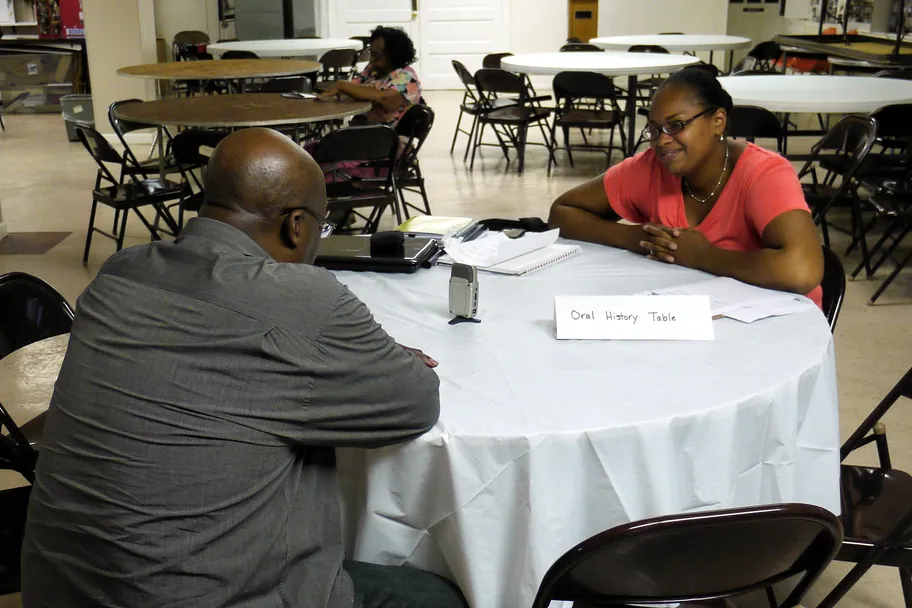
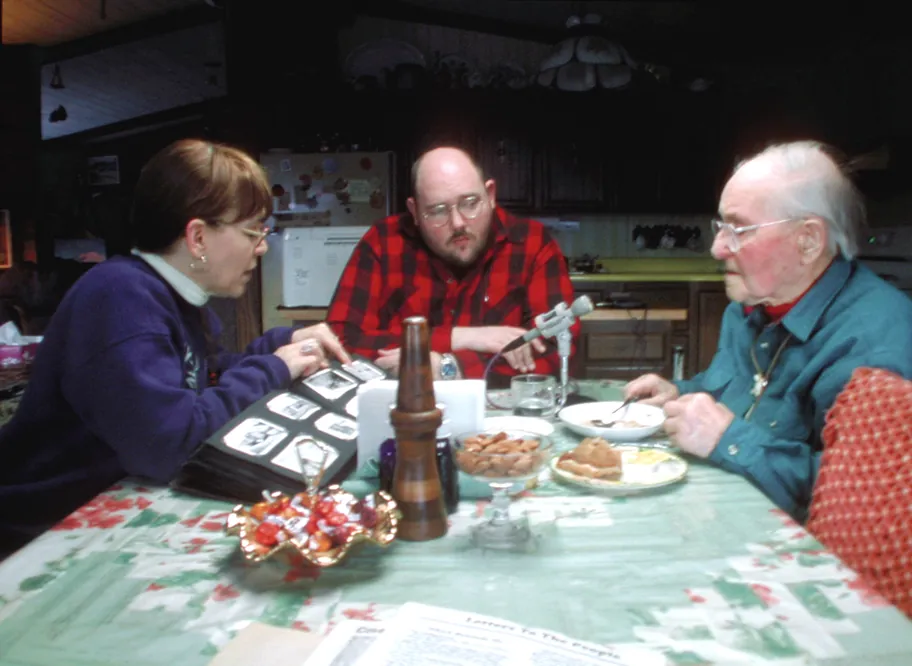
- Record the elders’ memories. Interviews with longtime members capture what the minutes never recorded: how worship felt, who cooked for the anniversary dinners, why a family joined. The Oral History Association calls for informed consent before each interview and “a signed legal release form, ideally when the interview is completed.” Our lists of questions to ask your grandparents adapt easily to church elders, and our guide on how to plan a community oral history project covers recording and consent in detail.
How do you handle dates that do not agree?
- Check every date against a second source, and say which event you are counting. Founding dates are where church histories most often go wrong, because a congregation can have several beginnings.
Cleveland’s St. John’s African Methodist Episcopal Church shows why. The Encyclopedia of Cleveland History reports that the congregation was chartered in 1836 as the African Methodist Episcopal Society by “a group of six ex-slaves who had been recruited in 1830 by Father William Paul Quinn.” So 1830 and 1836 both have a claim, depending on whether you count the first gathering or the charter. The encyclopedia calls St. John’s “the first African-American church, and the only permanent one, to be established in Cleveland during the antebellum period,” and Cleveland State University’s Praying Grounds project describes it as “the oldest African American religious institution in the city of Cleveland.”
Shiloh Baptist Church has the same kind of double date. Its mission formed in August 1849 and was recognized in August 1850, according to the encyclopedia, which calls Shiloh “the oldest congregation of black Baptists in Cleveland and second only to St. John’s” as the city’s oldest Black church. A careful anniversary book names both dates and explains the choice.
How do you organize and write the story?
- Choose a structure. Webster describes two options. A chronological history divides the congregation’s life into periods, with transition points such as “a change of name or address, a new building, a revival.” A topical history treats areas such as worship, education and outreach one at a time. He warns that dividing the story by pastors works only when the history is not too long and tenures are not too short; otherwise it “can almost guarantee tedious reading.”
St. John’s again offers a model. According to the Encyclopedia of Cleveland History, the congregation met in members’ homes and then Apollo Hall, and dedicated its first building as the Bolivar Street AME Church on January 6, 1850. It moved to Ohio Street in 1863, becoming the Ohio St. AME Church, and to Erie (East 9th) Street in 1878, when the name became St. John’s AME Church.
In 1908 it built the church at East 40th Street and Central Avenue, which the Cleveland Landmarks Commission recognized in 1974 and which was placed on the National Register in 1982. Each move and each new name is a natural chapter break.
- Draft, review and involve the congregation. Webster’s committee reviewed the manuscript periodically, and in two congregations he studied, the committee sponsored “a lunch for old-timers following Sunday worship” to answer questions the records could not. Sharing a draft with the congregation before the final version, he found, helped writers learn “what members of the congregation think is significant.”
Who owns the photographs in your anniversary book?
- Clear permissions for every image and interview. The U.S. Copyright Office states that “mere ownership of a copy or phonorecord that embodies a work does not give the owner of that copy or phonorecord the ownership of the copyright in the work.” A studio portrait in the church album may still belong, legally, to the photographer or the studio. The exception is a work made for hire, such as a photograph taken by an employee as part of the job, or certain commissioned works covered by a written agreement.
In practice, ask photographers or their families for written permission, credit every image, and note “photographer unknown” when that is the case. For interviews, the Oral History Association says narrators “must grant explicit permission to make their interview public,” and its guide for narrators says they may withdraw before the material is made available.
How do you design and print an anniversary book?
- Plan the book as an object, not only a text. Settle the page count, trim size, color or black and white, and budget early, then ask two or three printers for quotes and paper samples. Scan photographs at the resolution your printer recommends, write a caption for each one with names and dates, and add a timeline, a list of pastors and an index. Proofread twice, with fresh readers the second time.
When the anniversary book is printed, Webster recommends making copies available to members and friends, giving copies to the denomination’s historical archives, and keeping some “for future members of the church.”
What church anniversary ideas can grow from the book?
The research you gather can carry the whole celebration. Church anniversary ideas that build on a history book include:
- An exhibit of photographs and documents in the fellowship hall, with captions drawn from the book.
- A listening session that plays short excerpts from the elders’ interviews.
- A tour of the congregation’s earlier sites, using the addresses in the book.
- A reading of the founders’ story during the anniversary service.
- A gift of the finished book and the interview recordings to a local archive, so the history outlives the celebration.
Why a church history book matters now
Many congregations hold their own history in the memories of members who will not always be here to share it. A church history book written now, from records and recorded memories, keeps that story accurate for the generations who will lead the church next.
Mays HisToracle Consulting helps congregations with historical research and oral history project design for church history books and anniversary projects.
Questions people ask
How long does it take to write a church history book?
Plan on at least a year. The Presbyterian Historical Society’s guidelines for congregational histories advise getting started at least a year in advance of the anniversary date. A simple chronology of events can be written quickly, but a history that connects events and traces change over time takes more research, more reflection and much more time, and design and printing need their own room in the schedule.
What records should we look for first?
Start with the congregation’s annual reports, which the Presbyterian Historical Society calls generally the most informative sources available. Add minutes of the governing board, newsletters, bulletins, newspaper clippings, membership rolls, photographs and brochures. Then check your denomination’s archives, which may hold records, such as a neighboring church’s minutes, that tell the founding story differently than members remember it.
Can we use old photographs from the church album?
Owning a print is not the same as owning its copyright. The U.S. Copyright Office explains that mere ownership of a copy does not give the owner the copyright in the work, which usually belongs to the photographer unless it was a work made for hire or was transferred in writing. Ask photographers or their families for written permission, and credit every image you print.
Do church members need to sign anything before an oral history interview?
Yes. Oral History Association guidance calls for informed consent before the interview and a signed legal release, ideally when the interview is completed. Narrators must grant explicit permission before their interview is made public, and the OHA’s guide for narrators says they may withdraw before the material is made available. A simple release form, explained in plain language and signed after each interview, protects both the elder and the church.
Sources
- Guidelines for Writing an Anniversary History of Your Congregation, Presbyterian Historical Society, Presbyterian Church (U.S.A.).
- St. John's African Methodist Episcopal (AME) Church, Encyclopedia of Cleveland History, Case Western Reserve University.
- Shiloh Baptist Church, Encyclopedia of Cleveland History, Case Western Reserve University.
- Praying Grounds: African American Faith Communities, A Documentary and Oral History, Cleveland Memory Project, Cleveland State University.
- Copyright Basics (Circular 1), U.S. Copyright Office.
- Best Practices, Oral History Association.
- OHA Core Principles, Oral History Association.
- For Participants in Oral History Interviews, Oral History Association.