Nonprofit Storytelling: How Your Organization’s History Builds Trust
Nonprofit storytelling grounded in organizational history gives donors, boards and communities evidence to trust; here is how to research and tell it well.
Nonprofit storytelling builds trust when it rests on the organization’s documented history: why it was founded, what it actually did, whom it served and how it changed, told with evidence and with the consent of the people in the story. Organizational history gives donors, boards and communities a record they can check, which is a sturdier foundation than any single appeal.
This guide explains why history matters to trust, how to research and tell your organization’s story, nonprofit anniversary ideas that put that research to work, and the ethics of consent that should govern all storytelling for nonprofits.
Why does trust matter so much to nonprofits?
Independent Sector, which has studied the question for seven years with Edelman Data & Intelligence, opens its 2026 report with a plain statement: “Public trust is the currency of the nonprofit sector.” Its survey of 3,000 U.S. adults, conducted April 3 to 20, 2026, found that 56 percent of Americans report high trust in nonprofit organizations. That trust, the report says, “remains stable and higher than trust in any other major institution measured, including the military, small businesses, law enforcement, the news media, large corporations, and government.”
Trust also turns into giving. In the BBB Wise Giving Alliance’s 2026 Donor Trust Report, based on a December 2025 survey of more than 1,500 U.S. adults, 67.7 percent of participants said it is essential, a 9 or 10 out of 10, to trust a charity before donating.
Direct experience matters most. Among people who engaged with a nonprofit during the past year, Independent Sector found, 60 percent said the interaction increased their trust in nonprofits.
What makes organizational history persuasive?
Independent Sector’s 2026 findings point to what earns trust: openness. Seventy-four percent of Americans say transparency about how nonprofits use their funds would positively affect their trust, and 73 percent say the same about where funding comes from. Sixty-two percent say a board that includes people who have used the organization’s services would positively affect their trust.
An accurate organizational history is transparency stretched across time. It shows a donor not only what the organization says it does, but what it has done, decade after decade, and how it responded when circumstances changed. It also shows a new board member what commitments they are inheriting.
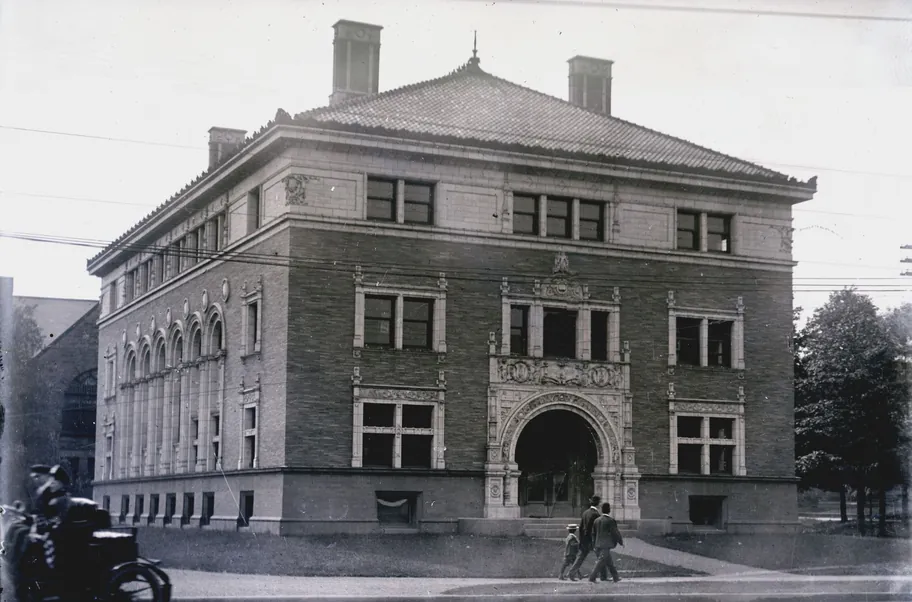
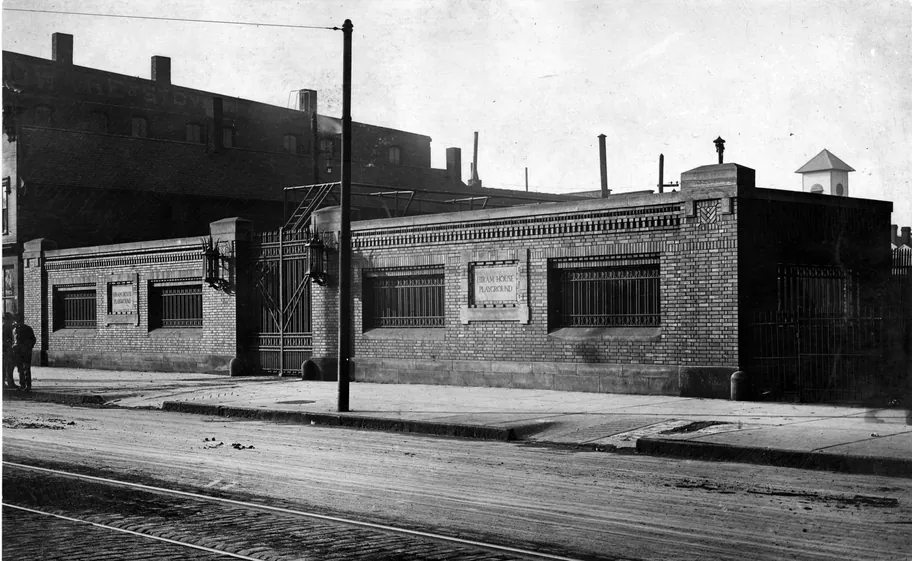
Cleveland’s Hiram House, shown above, is a useful example. According to the Encyclopedia of Cleveland History, Hiram House Social Settlement was established in 1896 as an outgrowth of a Hiram College student project. Its neighborhood changed from East European Jewish immigrants in 1900, to Italians by 1914, and to African Americans after World War I. Work at its Orange Avenue location ceased in 1941, branch operations ended in 1948, and since then, the encyclopedia reports, Hiram House has operated as a year-round camping facility.
That is a story of real change in mission, and it can be told with confidence because the records survived. The encyclopedia points readers to the Western Reserve Historical Society’s finding aids for the Hiram House Social Settlement records, neighborhood surveys and photographs, and to a 1977 doctoral dissertation by John J. Grabowski that studied the settlement’s first three decades.
How do you research your organization’s history?
Most organizations already hold the raw material for a strong history. The work is to find it, protect it and read it carefully.
- Inventory and protect your records. Gather board minutes, annual reports, newsletters, grant reports, press clippings, photographs and event programs, and list what you have before anything else is lost. The Western Reserve Historical Society’s Heritage Management team helps organizations “identify and preserve organizational heritage,” and its past projects include record inventories, organizing archives and digitization.
- Build a timeline. Mark the founding, leadership changes, new programs, moves, mergers, funding shifts and moments of crisis. A clear timeline shows where the gaps are and which questions to ask next.
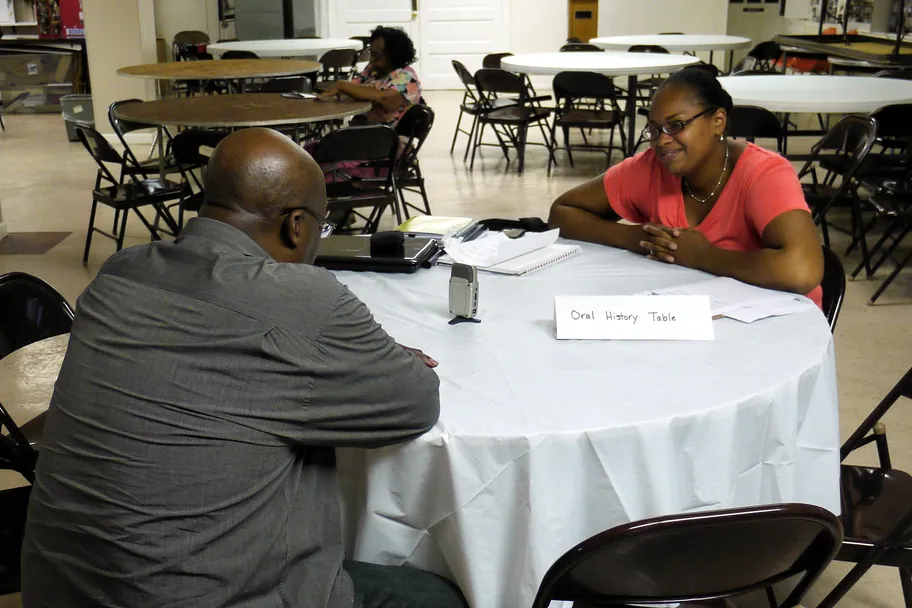
- Record oral histories. Interview founders, longtime staff, board members, volunteers and the people your organization has served. The Oral History Association defines oral history as “a field of study and a method of gathering, preserving, and interpreting the voices and memories of people, communities, and participants in past events.” Our guide on how to plan a community oral history project covers equipment, consent and archiving.
- Look beyond your own files. Local newspapers, partner organizations, funders and regional archives may hold records you no longer have. In Northeast Ohio, the Western Reserve Historical Society’s Corporate and Philanthropic History Archives Program partners with businesses, philanthropies and nonprofits to help them maintain and manage their own stories.
- Tell the hard chapters too. A history that hides a failed program or a difficult transition will not survive a careful reader. The Ethical Storytelling pledge asks practitioners to “truthfully represent a situation or story” and to show the realities, complexities and nuances of the issues they work on.
- Decide where the story will live. The same research can feed a website timeline, an annual report feature, a board orientation, an exhibit or a written history. The National Council on Public History gives an institutional history written by a historical consultant for a business client as one example of public history work, and our article on what public history is explains that wider field.
What are good nonprofit anniversary ideas?
Anniversaries are the natural moment to bring organizational history forward. The Western Reserve Historical Society lists collaboration on “anniversaries, celebrations, and displays” among its heritage management projects. Nonprofit anniversary ideas that rest on real research include:
- A short illustrated history, in print and online, with a timeline donors can scan in a minute.
- An evening of recorded memories, playing short excerpts from interviews with founders and longtime members.
- A “then and now” feature in the anniversary annual report that pairs an early photograph or document with the program today.
- A traveling exhibit for your lobby, a partner’s space or a library.
- A gift of the organization’s historical records to a regional archive, so researchers can use them long after the celebration.
Whatever the format, plan early. The Presbyterian Historical Society advises congregations to start an anniversary history at least a year ahead, and that guidance suits most nonprofits too. If you are weighing outside help, our guide on when to hire a historical consultant may help.
How do you practice ethical storytelling for nonprofits?
Every story a nonprofit tells involves real people, and many of them have less power than the organization telling it. The Ethical Storytelling pledge, in the version the Center for Effective Philanthropy published in July 2019, holds that stories “should always be constituent first,” ahead of donors and funders. Among its commitments, practitioners pledge to:
- “Explain to constituents the purpose of the story, where it will be used, and answer any questions they might have before photographing, filming, or recording.”
- “Ask the constituent if they wish to be named or identified and act according to their wishes.”
- “Use all images and messages with the full understanding, participation, and permission of the constituent or the constituent’s legal guardian.”
- “Not use images, footage, or words that sensationalize or stereotype a person or a situation.”
- “Ask for feedback from our constituents and incorporate this feedback into the final story.”
- “Choose not to tell the story, despite the resources invested, when the story cannot be told with the integrity of this pledge.”
Oral history adds its own safeguards. The Oral History Association calls for informed consent before an interview and a signed release, and states that narrators “must grant explicit permission to make their interview public.” In practice, that means the people in your history are collaborators, not subjects.
Why nonprofit storytelling grounded in history matters now
Independent Sector’s 2026 study found that half of Americans believe nonprofits are making divisions in America better, up from 44 percent in 2025. Trust at that level is an asset, and it lasts when the stories behind it are accurate, documented and told with the consent of the people in them. An organization that knows its own history can explain its choices, honor the people who built it and show supporters a record worth backing.
Mays HisToracle Consulting helps nonprofits research and tell their organizational history through historical research, oral history projects and narrative-based consulting.
Questions people ask
What is organizational history?
Organizational history is the documented story of an institution: why it was founded, what it set out to do, whom it served, who led it and how it changed. It is drawn from the organization’s own records, outside archives and the memories of founders, staff, volunteers and community members. The National Council on Public History offers an institutional history written by a historical consultant for a business client as one example of public history work.
Does an organization’s history really affect donor trust?
Surveys measure transparency rather than history itself, but the link is close. Independent Sector’s 2026 study found that 74 percent of Americans say transparency about how a nonprofit uses its funds would positively affect their trust. Give.org’s 2026 Donor Trust Report found that 67.7 percent of respondents consider trust essential before donating. A documented, accurate history is one of the clearest forms of transparency an organization can offer.
Do we need permission to tell a client’s or member’s story?
Yes. The Ethical Storytelling pledge asks organizations to explain the purpose of a story and where it will be used before photographing, filming or recording, to ask whether the person wishes to be named, and to use images and messages only with their full understanding, participation and permission. For recorded interviews, the Oral History Association calls for informed consent and a signed release before anything is made public.
How far ahead should we plan an anniversary history?
Plan on at least a year. The Presbyterian Historical Society gives that advice to congregations writing anniversary histories, and the same reasoning applies to nonprofits: a simple chronology can be assembled quickly, but research, interviews, review by the board and longtime members, and design all take time. Starting early also gives you room to locate records that have drifted into storage or into former leaders’ homes.
Sources
- Trust in Nonprofits and Philanthropy, Independent Sector.
- Trust in Nonprofits and Philanthropy Report, July 2026, Independent Sector.
- 2026 Donor Trust Report, BBB Wise Giving Alliance (Give.org).
- Take the Ethical Storytelling Pledge, Center for Effective Philanthropy.
- The Pledge, Ethical Storytelling.
- Heritage Management, Western Reserve Historical Society.
- Hiram House, Encyclopedia of Cleveland History, Case Western Reserve University.
- Best Practices, Oral History Association.
- OHA Core Principles, Oral History Association.
- Do Oral History, Oral History Association.
- About the Field, National Council on Public History.
- Guidelines for Writing an Anniversary History of Your Congregation, Presbyterian Historical Society, Presbyterian Church (U.S.A.).