Karamu House History: From Playhouse Settlement to Cleveland Landmark
Karamu House began in 1915 as a Cleveland settlement house founded by Russell and Rowena Jelliffe and grew into a nationally known home for Black theater.
Karamu House is a Cleveland arts institution that began in 1915 as a neighborhood settlement house founded by Russell and Rowena Woodham Jelliffe, and it grew into a nationally known home for interracial theater and for Black actors, playwrights, dancers and visual artists. Today Karamu House describes itself as “the oldest, producing African American theatre in the nation,” and its building on East 89th Street is listed on the National Register of Historic Places.
Its story runs through more than a century of Cleveland history, from the Great Migration to the Harlem Renaissance to the present. Because Karamu’s history is often summarized with superlatives, this account sticks closely to what the sources say and notes where they disagree.
At a glance
- Founded in 1915 by Russell and Rowena Woodham Jelliffe, with the support of the Second Presbyterian Church, at 2239 East 38th Street.
- Popularly known as the Playhouse Settlement; plays with interracial casts began in 1917.
- Its adult drama group, organized in 1920, was renamed the Gilpin Players in 1922 after the actor Charles Gilpin.
- The theater took the Swahili name Karamu in the 1920s, and the whole settlement adopted it in 1941.
- After a 1939 fire, Karamu rebuilt at East 89th Street and Quincy Avenue, opening in 1949.
- Listed on the National Register of Historic Places at 2355 East 89th Street.
How did Karamu House begin?
According to the Encyclopedia of Cleveland History, Karamu began in 1915 as the Neighborhood Association at 2239 East 38th Street, founded by two young white social workers, Russell and Rowena Woodham Jelliffe, with the support of the Second Presbyterian Church. The Ohio historical marker at Karamu adds that the effort was initiated by the church’s Men’s Club, which hired the Jelliffes as founding directors.
According to the encyclopedia, the couple met at Oberlin College, graduated in 1914, earned master’s degrees in sociology at the University of Chicago and married on May 28, 1915. The encyclopedia says they were drawn to Cleveland by its ethnic diversity and progressive reputation. Karamu House’s own history places the settlement at the corner of East 38th Street and Central Avenue, in an area then called “The Roaring Third.”
Like other settlement houses of the era, it offered children’s theater and other social, recreational and educational activities. It was soon known simply as the Playhouse Settlement.
How did theater become the heart of the settlement?
The Encyclopedia of Cleveland History says Rowena Jelliffe began producing children’s plays with interracial casting to help draw the settlement’s largely African American constituency into its programs, and dates the first plays with interracial casts to 1917. The church affiliation ended in 1919, when the Jelliffes incorporated as the Neighborhood Association.
In 1920 the settlement began sponsoring the Dumas Dramatic Club, which was renamed the Gilpin Players in 1922, after the noted Black actor Charles Gilpin. The encyclopedia’s entry on Rowena Jelliffe says the adult dramatic group was organized in the couple’s living room in 1920. Rowena Jelliffe directed 100 plays at Karamu between 1920 and 1946.
The neighborhood around the settlement was changing fast. Karamu House’s history recalls that the early 1920s brought a large number of African Americans from the South into the area during the Great Migration, and that the Jelliffes resisted pressure to exclude their new neighbors and insisted that all races were welcome. Our article on the Great Migration in Cleveland explains the larger movement that reshaped the Central Avenue district.
What does the name Karamu mean?
Karamu is a Swahili word, and the sources translate it slightly differently. Karamu House and the Ohio historical marker render it as a “place of joyful gathering.” The Encyclopedia of Cleveland History renders it “a place of joyful meeting.”
They also differ on when the name was first used. The marker states that in 1924, the educator and Gilpin Player Hazel Mountain Walker named the theater “Karamu.” The encyclopedia dates the name to 1927, when a theater adjacent to the settlement was acquired and named Karamu. The encyclopedia dates the next step to 1941, when the entire Playhouse Settlement officially took the name Karamu House.
What was Langston Hughes’s connection to Karamu House?
Langston Hughes, whom the Encyclopedia of Cleveland History describes as a central member of the Harlem Renaissance, spent part of his youth in Cleveland. The Encyclopedia of Cleveland History reports that his mother and stepfather moved the family to Cleveland in 1916, and that he began writing seriously at Central High School, encouraged by his teachers and by the Jelliffes of the Playhouse Settlement.
The ties lasted. The encyclopedia calls Hughes a “Karamu alumnus” and reports that in the 1930s the Gilpin Players gave premieres of several of his plays, six of them in 1936 and 1937. It also notes that Rowena Jelliffe once completed a play by Hughes when its final act failed to arrive in time, and that his “Black Nativity” became one of the most treasured of Karamu’s productions as an annual holiday presentation.
Karamu House’s own history says that the Playhouse Settlement “became an active contributor to the Harlem Renaissance, and Langston Hughes roamed the Settlement’s halls constantly.” It also quotes Hughes in 1961: “it is a cultural shame that a great country like America, with twenty million people of color, has no primarily serious colored theatre. There isn’t. Karamu is the very nearest thing to it.”
Is Karamu House the oldest Black theater in the country?
Karamu House describes itself, on its own website, as “the oldest, producing African American theatre in the nation.” The qualifier is important. The claim is about a producing theater, an organization that still creates and stages its own productions, and it is the organization’s description of itself.
The other authorities consulted for this article do not use the word “oldest.” The Encyclopedia of Cleveland History calls Karamu a settlement that “became nationally known for its dedication to interracial theater and the arts,” and the National Register record identifies its area of significance as performing arts, with 1915 as its significant year. When you cite the claim, the accurate form is to attribute it to Karamu House in its own words.
How did Karamu House grow after 1939?
A fire destroyed the theater in 1939. With help from Leonard Hanna Jr. and the Rockefeller Foundation, Karamu was rebuilt in 1949 as a two-theater complex at East 89th Street and Quincy Avenue, with facilities for its programs and classes in dancing and the visual arts.
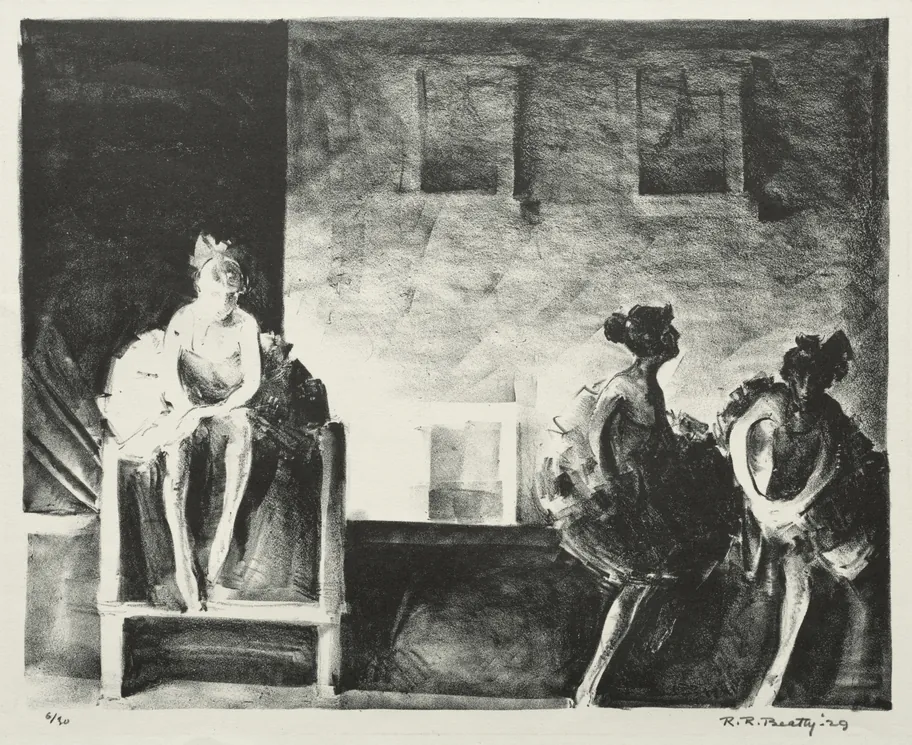
Those arts programs were already well established. In 1940 a Karamu modern dance troupe trained by Marjorie Witt Johnson won praise from Life magazine for its appearance at the New York World’s Fair. The Cleveland Museum of Art notes that printmaker Richard Beatty, whose 1929 lithograph appears above, was hired as an instructor when Karamu formed a graphic arts program around 1933. By the time the Jelliffes retired as directors in 1963, Karamu had 4,000 members and a $1 million plant.
Led in the 1950s by staff members such as Benno Frank and Reuben Silver, Karamu gained a reputation, in the encyclopedia’s words, as “one of the best amateur groups in the country.” In the 1970s it turned toward productions primarily by Black artists about the Black experience, and after Margaret Ford-Taylor became executive director in 1988, it sought to return to its multicultural roots while fulfilling what the encyclopedia calls its “unique responsibility” for the development of Black artists. Performers who refined their craft at Karamu include Ruby Dee, Ron O’Neal, Robert Guillaume and Imani Hakim.
Where is Karamu House today?
Karamu House stands at 2355 East 89th Street in Cleveland, Cuyahoga County, the address recorded in its National Register record at the National Park Service. The Encyclopedia of Cleveland History lists finding aids at the Western Reserve Historical Society for the Karamu House Records and Photographs and for the Russell and Rowena Jelliffe Papers and Photographs, collections of the kind described in our guide to Cleveland history archives.
Karamu states its mission today as “to produce professional theatre, provide arts education and present community programs for all people while honoring the Black experience.” It also notes that it has been featured in the Smithsonian’s National Museum of African American History and Culture.
Why does Karamu House matter now?
Karamu’s history shows how a neighborhood institution can answer the needs of its community and, in doing so, shape national culture. It also shows why precise language matters: the strongest way to honor Karamu is to tell its story as the records tell it, including the places where they differ.
Schools and community groups planning programs around Black arts history can find ideas in our Black History Month program guide. Mays HisToracle Consulting offers historical research, public presentations and curriculum development for organizations that want to tell stories like Karamu’s with care.
Questions people ask
When was Karamu House founded?
Karamu House traces its founding to 1915, when Russell and Rowena Woodham Jelliffe, two young social workers, opened a neighborhood settlement house on East 38th Street in Cleveland with the support of the Second Presbyterian Church. It soon became known as the Playhouse Settlement, and the whole settlement officially took the name Karamu House in 1941.
What does Karamu mean?
Karamu is a Swahili word. Karamu House translates it as “a place of joyful gathering,” and the Ohio historical marker uses nearly the same phrase. The Encyclopedia of Cleveland History renders it “a place of joyful meeting.” Sources differ on when the theater first took the name: the marker says 1924, and the encyclopedia says 1927.
Is Karamu House the oldest Black theater in the United States?
Karamu House describes itself as “the oldest, producing African American theatre in the nation.” The wording matters: the claim, made by the organization, refers to a producing theater, one that still stages its own productions. The Encyclopedia of Cleveland History, the National Register record and the Ohio historical marker consulted for this article do not make an oldest claim.
What was Langston Hughes’s connection to Karamu House?
Langston Hughes moved to Cleveland with his family in 1916 and began writing seriously at Central High School, encouraged by his teachers and by Russell and Rowena Jelliffe of the Playhouse Settlement. In 1936 and 1937 the Gilpin Players of Karamu produced six of his plays, and his “Black Nativity” later became one of Karamu’s treasured holiday productions.
Sources
- Karamu House, Encyclopedia of Cleveland History, Case Western Reserve University.
- Jelliffe, Russell W., Encyclopedia of Cleveland History, Case Western Reserve University.
- Jelliffe, Rowena Woodham, Encyclopedia of Cleveland History, Case Western Reserve University.
- Hughes, (James) Langston, Encyclopedia of Cleveland History, Case Western Reserve University.
- About, Karamu House.
- History, Karamu House.
- Ohio Historical Marker 57-18, Karamu House, Remarkable Ohio, Ohio History Connection.
- Karamu House (National Register Information System ID 82001368), National Park Service, NPGallery.
- Richard Beatty, Intermission, 1929, The Cleveland Museum of Art.