The Hough Uprising of 1966: What Happened in Cleveland’s Hough Neighborhood
The Hough uprising, often called the Hough riots, was a week of unrest in Cleveland’s Hough neighborhood that began July 18, 1966, and left four people dead.
The Hough uprising, also known as the Hough riots, was a week of civil unrest in Cleveland’s Hough neighborhood that began on the evening of July 18, 1966. Four African Americans were killed, close to 300 people were arrested and about 240 fires were set before order returned, according to the Encyclopedia of Cleveland History.
The events grew out of years of overcrowding, neglect and distrust between Black residents and city government, especially the police. This account relies on the encyclopedia, on Cleveland Historical and on a 1968 history by Marc E. Lackritz, and it notes where those sources disagree.
At a glance
- Dates: July 18 to 24, 1966, by the encyclopedia’s count; Cleveland Historical says the unrest lasted approximately one week.
- Place: Hough, a two-square-mile neighborhood on Cleveland’s east side, bounded by Euclid and Superior Avenues and East 55th and East 105th Streets.
- Spark: a dispute at the Seventy-Niners Cafe at Hough Avenue and East 79th Street.
- Toll: four African Americans killed, about 30 injured, close to 300 arrested and an estimated $1 million to $2 million in property damage.
- Response: Mayor Ralph Locher called in the National Guard and closed all bars and taverns.
What happened in the Hough neighborhood in July 1966?
Accounts of the first incident differ. Cleveland Historical reports that stories centered on two purported events at the Seventy-Niners Cafe on July 18: the ejection of a Black resident who had been soliciting charity, and the white owner’s refusal to give a glass of water to a Black customer buying take-out. A crowd gathered outside, rocks were thrown, police were called and, in the encyclopedia’s words, rock throwing “escalated into vandalism and looting.”
The disorder continued the next evening, with fires and reports of sniper fire. Lackritz writes that Mayor Locher decided to request the National Guard at 3:30 that afternoon, July 19, and the encyclopedia reports that the Guard moved into Hough on the morning of July 20. After a major fire at Cedar Avenue and East 106th Street on July 21, conditions slowly returned to normal.
Cleveland Historical notes that the violence diminished in severity beginning July 22. On Monday, July 25, stores that had escaped serious damage reopened, and the Guard was gradually released. Lackritz records that the last guardsmen were released from duty on July 31.
Who died during the Hough uprising?
Four people were killed, all of them African American. Lackritz’s account, pieced together from newspaper reports, a citizens panel report and interviews, names each of them, and they deserve to be remembered by name.
Joyce Arnett, 26, was returning home in the early morning hours of the first night when police ordered her into a nearby apartment for safety. Worried about her three young daughters at home, she called out from a window and was struck by gunfire; police said she was caught in a crossfire. Percy Giles, 36, was shot on his way to help a man board up his business on Hough Avenue.
Sam Winchester, 54, was fatally shot while waiting for a bus in the Kinsman area, and Lackritz reports that he told police before he died that his attacker was white. Benoris Toney, 29, a father of five, was shot while driving at East 121st Street and Euclid Avenue. Lackritz reports that police detained six white suspects and that second-degree murder charges were filed against two men and a juvenile. The encyclopedia says he was killed by a resident of Little Italy in an incident that was later ruled self-defense.
Why did the Hough uprising happen?
Hough changed rapidly in the 1950s. The encyclopedia reports that the neighborhood went from 5 percent nonwhite in 1950 to 74 percent nonwhite in 1960, as urban renewal displaced Black residents from the Central neighborhood, real estate companies encouraged panic selling and redlining narrowed housing choices. Cleveland Historical adds that the Second Great Migration brought new Black residents from the South; our article on the Great Migration in Cleveland explains that longer story.
Housing in Hough was crowded and deteriorating. Cleveland Historical reports that virtually no new homes had been built there since World War II, that aging houses were divided into more units, and that the city did little to enforce housing codes while residents paid high rents. The University-Euclid urban renewal plan, unveiled in 1960, produced only a handful of scattered rehabilitation projects by 1966.
Relations with the police were deeply strained. An independent report in 1965 found that only 175 of the police force’s 2,100 employees were Black. Earlier that summer, after disturbances that began on June 23, Mayor Locher had announced an eight-point peace program on July 5, but Cleveland Historical concludes that it proved ineffective.
On July 25, Councilman M. Morris Jackson, who represented the Hough area, told City Council, in remarks addressed to Mayor Locher, that “[i]t was not without warning. The warnings were in the broken promises of urban renewal, Mr. Mayor.”
What did the grand jury and other investigations find?
A special session of the Cuyahoga County Grand Jury was called on July 25, headed by former Cleveland Press editor Louis B. Seltzer. Cleveland Historical describes the 15-member jury as all white and drawn from outside Hough. The sources give different dates for its report: Cleveland Historical says August 2, 1966, while Lackritz cites a report submitted for filing on August 9.
According to Lackritz, who quotes the report, the jury concluded that the disorder was “organized, precipitated, and exploited by a relatively small group of trained and disciplined professionals.” Lackritz reports that the jury commended the police and the National Guard, and Cleveland Historical says the report exonerated the police of all wrongdoing. Cleveland Historical adds that federal and community investigations refuted those findings and that “no evidence was found to corroborate the jury’s findings that Communist agitators were responsible.”
The encyclopedia’s current entry summarizes the outcome differently, stating that the grand jury investigation “found no evidence that the riots had been planned or controlled by radical groups in Cleveland, as had been initially alleged.” The sources conflict on this point. Lackritz’s direct quotation of the report matches Cleveland Historical’s account, and researchers who need to settle the question should consult the report itself, which the encyclopedia lists among its sources.
Other investigations reached different conclusions. A citizens committee organized by the Urban League of Cleveland found that the city’s disregard of conditions in Hough “led to frustration and desperation.” The encyclopedia notes that the Urban League and the Congress of Racial Equality criticized the grand jury and police heavy-handedness, and that residents formed a Citizens Committee on Hough Disturbances to tell their side of the story.
Riots or uprising: why does the name matter?
“Hough riots” is the name used in 1966, and it remains in use today. The grand jury’s own report was titled as a report “relating to Hough riots,” and the encyclopedia’s entry is titled “Hough Riots.” It describes a “spontaneous outbreak of civil disorder which encompassed a spectrum ranging from angry protest to vandalism, looting, and arson.”
Some more recent accounts prefer “uprising.” Cleveland Historical calls the events “The Hough Uprisings of 1966” and describes them as “a response to the inequalities faced by the Black community living on Cleveland’s east side.” Todd Michney, who updated the encyclopedia’s entry, titled his 2006 Journal of Urban History article on the subject “Race, Violence, and Urban Territoriality: Cleveland’s Little Italy and the 1966 Hough Uprising.” Even the encyclopedia places Hough among the “similar urban uprisings around the country from 1965 to 1968.”
The word “uprising” does not excuse violence or minimize the losses. It points readers toward the conditions and grievances that residents and the Urban League’s citizens committee emphasized. This article uses both terms because readers search for both.
What happened to Hough after 1966?
The neighborhood’s population fell sharply. The encyclopedia gives a peak of 65,694 residents in 1950, falling to 25,330 by 1980 and 12,594 by 2012; Cleveland Historical, using a different count, puts the peak at over 83,000 in 1957. Cleveland Historical notes that unrest, looting and arson returned to the area in the summer of 1968, following the Glenville shootout of July 23, 1968, a gun battle between Cleveland police and an armed group.
Change came slowly. By the 1970s, the encyclopedia reports, development was picking up, often led by council member Fannie Lewis and the Hough Area Development Corporation, which it calls one of the nation’s first community development corporations. New housing such as Lexington Village followed, and the Church Square shopping center opened in 1993. League Park, the former home of the Cleveland Indians, was restored in 2014. Still, the encyclopedia reports that about 55 percent of Hough families lived below the poverty line as of 2019.
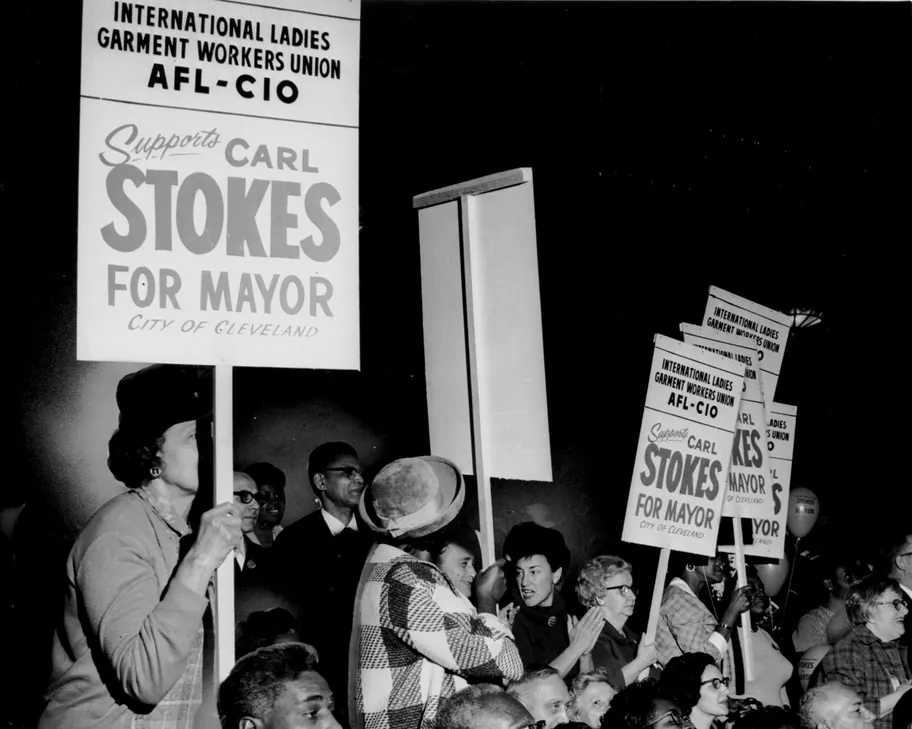
Cleveland’s politics changed too. In November 1967, the year after the uprising, voters elected Carl B. Stokes mayor.
Why does the Hough uprising matter now?
The history of Hough shows how housing policy, policing and public investment shape a neighborhood over decades, and how official explanations can differ from residents’ own accounts. Telling that history well means naming the people who died, quoting the record carefully and listening to the people who lived it.
Communities that want to document their own neighborhood history, in residents’ own words, can learn from projects like the East Cleveland Oral History Project. Mays HisToracle Consulting designs oral history projects and offers historical research and public presentations for organizations doing that work.
Questions people ask
When were the Hough riots?
The disorder began on the evening of July 18, 1966, in Cleveland’s Hough neighborhood. The Encyclopedia of Cleveland History dates the Hough riots from July 18 to July 24, 1966. Cleveland Historical says the unrest lasted approximately one week and diminished in severity beginning July 22. Stores that had escaped serious damage reopened on Monday, July 25.
How many people died in the Hough riots?
Four people were killed, all of them African American, according to the Encyclopedia of Cleveland History. A 1968 history by Marc Lackritz names them: Joyce Arnett, 26; Percy Giles, 36; Sam Winchester, 54; and Benoris Toney, 29. The encyclopedia also counts about 30 injured and close to 300 arrested, while its separate entry on the Hough neighborhood gives 50 injured.
What caused the Hough riots?
The immediate spark was a dispute at the Seventy-Niners Cafe at Hough Avenue and East 79th Street on July 18, 1966. Historians trace the deeper causes to overcrowded and neglected housing, displacement by urban renewal, redlining, stalled redevelopment plans, overcharging by local merchants and a police force that was overwhelmingly white and distrusted by many Black residents.
Why do some accounts call it the Hough uprising?
The name “Hough riots” dates to 1966, when the grand jury used it, and the Encyclopedia of Cleveland History still titles its entry “Hough Riots.” Cleveland Historical calls the events “The Hough Uprisings of 1966” and describes them as a response to the inequalities faced by the Black community on Cleveland’s east side. Todd Michney, who updated the encyclopedia’s entry, used “Hough Uprising” in the title of a 2006 article.
Sources
- Hough Riots (updated by Todd Michney), Encyclopedia of Cleveland History, Case Western Reserve University.
- Hough, Encyclopedia of Cleveland History, Case Western Reserve University.
- The Hough Uprisings of 1966 (Richard Raponi), Cleveland Historical.
- The Hough Riots of 1966, Chapter I: Hough Explodes (Marc E. Lackritz, 1968), MSL Academic Endeavors, Cleveland State University Michael Schwartz Library.
- The Hough Riots of 1966, Chapter III: The Grand Jury vs. the Black Community (Marc E. Lackritz, 1968), MSL Academic Endeavors, Cleveland State University Michael Schwartz Library.
- Glenville Shootout, Encyclopedia of Cleveland History, Case Western Reserve University.
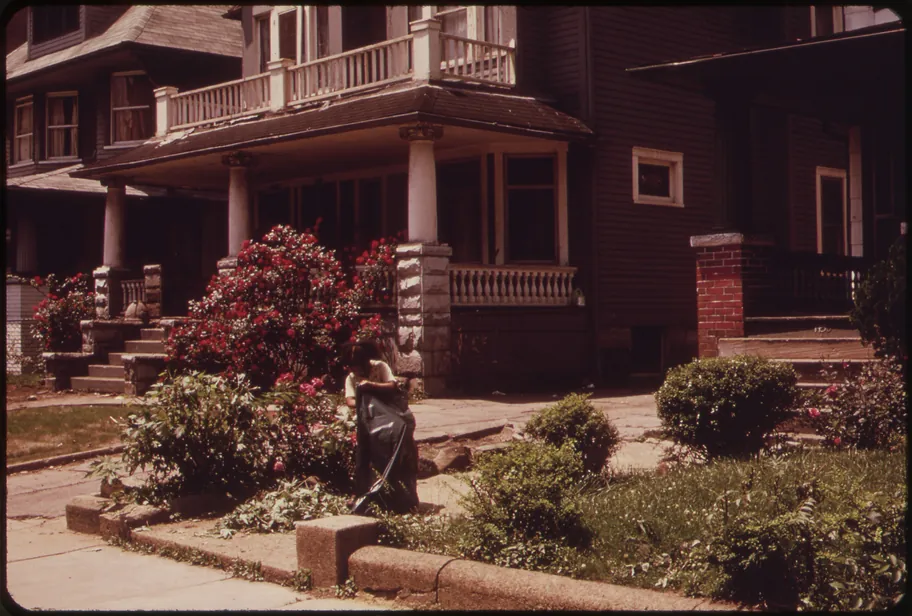
- Well Maintained Block on Crawford Road (NAID 550125), National Archives.