Carl and Louis Stokes: Cleveland Brothers Who Changed American Politics
Carl Stokes was elected mayor of Cleveland in 1967, and his brother Louis served 30 years in Congress as Ohio’s first African American representative.
Carl Stokes and Louis Stokes were brothers from Cleveland who grew up in public housing and both made history in elected office. Carl B. Stokes was elected mayor of Cleveland in November 1967, and Louis Stokes was elected in 1968 as Ohio’s first African American member of Congress, where he served for 30 years.
Their careers ran side by side. Carl’s election made Cleveland a national story, and Louis built a long career in Washington that took him to the House Appropriations Committee, the leadership of the Congressional Black Caucus and the chair of the committee that reinvestigated the assassinations of President John F. Kennedy and Dr. Martin Luther King Jr.
At a glance
- Louis Stokes: born February 23, 1925; died August 18, 2015.
- Carl B. Stokes: born June 21, 1927; died April 3, 1996.
- Raised in Outhwaite, one of Cleveland’s earliest federally financed public housing projects.
- Carl was elected mayor of Cleveland in November 1967 and reelected in 1969.
- Louis served in the U.S. House from January 3, 1969, to January 3, 1999.
- Louis chaired the House Select Committee on Assassinations from March 8, 1977.
Who were Carl and Louis Stokes?
According to the Encyclopedia of Cleveland History, their parents, Charles Stokes and Louise (Stone) Stokes, came from separate cities in Georgia and met after moving to Cleveland during the Great Migration. Our article on the Great Migration in Cleveland describes the movement that reshaped Black Cleveland in those decades.
Charles Stokes, a laundry worker, died when Carl was two years old. Louise Stokes, a cleaning woman, raised both boys in Outhwaite, which the encyclopedia calls “Cleveland’s first federally funded housing project for the poor.” The encyclopedia’s entry on public housing adds context: Outhwaite was one of three Cleveland projects, with Cedar-Central and Lakeview Terrace, built with federal financing between 1935 and 1937.
Both brothers served in the U.S. Army and then studied law at Cleveland-Marshall Law School. Louis served from 1943 to 1946, attended Western Reserve College on the G.I. Bill and earned his law degree in 1953. Carl left high school in 1944, joined the Army at 18, earned his diploma in 1947, graduated from the University of Minnesota in 1954 and finished law school in 1956. The brothers later practiced law together in Cleveland.
How did Carl Stokes become mayor of Cleveland?
Carl Stokes entered politics first. In 1962 he became the first Black Democrat elected to the Ohio House of Representatives, where he served three terms. In 1965 he ran for mayor of Cleveland as an independent and narrowly lost to the incumbent, Ralph Locher.
Two years later he ran again. He defeated Locher in the Democratic primary and then defeated the Republican candidate, Seth Taft, in the general election. The encyclopedia credits his victory to his ability to mobilize both Black and white voters, and it reports that he won with “a 50.5 majority.”
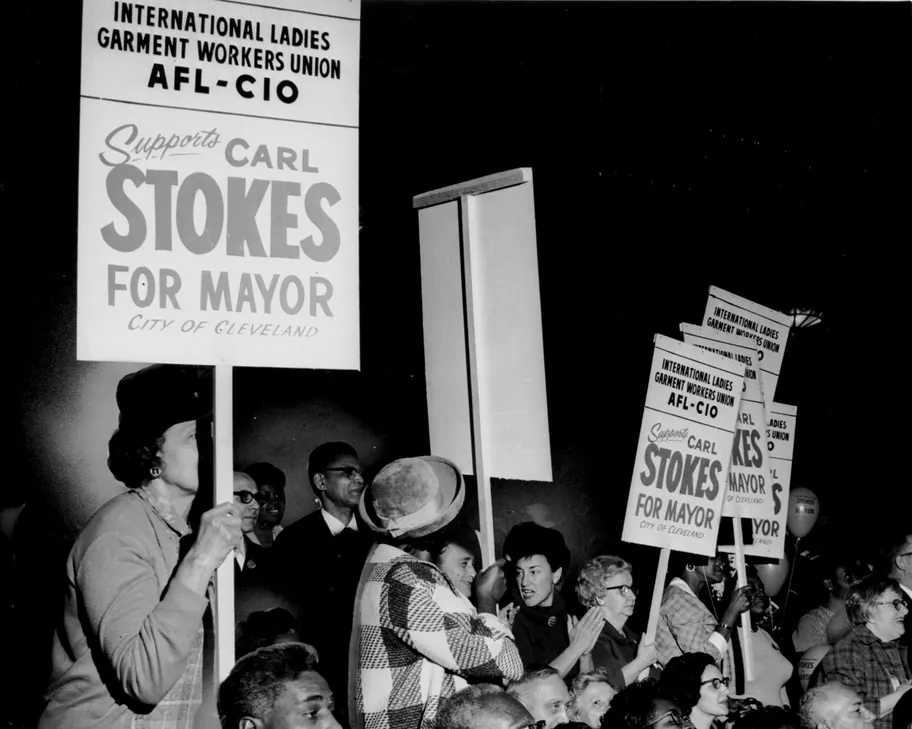
The 1967 campaign came the year after the Hough uprising of July 1966. Organized labor took part: the photograph above, preserved by the Kheel Center at Cornell University, records members of the International Ladies Garment Workers Union (ILGWU) demonstrating for Stokes at Public Music Hall on October 12, 1967, and its record notes that he “received enthusiastic backing of Cleveland AFL.”
Was Carl Stokes the first Black mayor of a major city?
The answer depends on the source, so it is worth quoting each one exactly. The Encyclopedia of Cleveland History says Carl Stokes “became the first African-American mayor of a major U.S. city when he was elected mayor of Cleveland in November 1967.” Its entry on his administration uses the phrase “the first black mayor of a major American city.”
The U.S. House of Representatives’ history office, in its biography of Louis Stokes, is more cautious. It says that Carl, in 1967, won election as mayor of Cleveland, “becoming one of the first African Americans to lead a major U.S. city.” Writers who want to use the phrase “first Black mayor of a major city” should attribute it to the source that makes the claim.
What did Carl Stokes do as mayor?
The encyclopedia describes the Stokes administration, from 1967 to 1971, as “marked by progress, controversy, and the unrest prevalent in many urban areas.” He persuaded the federal Department of Housing and Urban Development to release urban renewal funds that had been frozen under the previous administration, and he persuaded city council to raise the city income tax from 0.5 percent to 1 percent.
During his administration, Cleveland passed an Equal Employment Opportunity Ordinance requiring firms that did business with the city to have active programs to increase minority employment. Voters approved a $100 million bond issue to improve sewage treatment. His Cleveland: NOW! program raised more than $5 million for community programs, but contributions dried up after the Glenville shootout of July 23, 1968, a gun battle between Cleveland police and an armed group, when it was discovered that a militant group led by Fred Ahmed Evans had received some $6,000 from the fund.
His relationship with the police department deteriorated after the shootout, and his effort to reform the department was unsuccessful. Stokes was reelected in 1969 and chose not to run for a third term in 1971. He later became a television anchor at WNBC in New York, a municipal judge in Cleveland from 1983 to 1994, and U.S. Ambassador to the Seychelles.
How did Louis Stokes get to Congress?
Louis Stokes made his name as a civil rights lawyer. Working with the NAACP, he helped challenge Ohio’s 1965 congressional redistricting, which had fragmented Black voting strength in Cleveland. He and Charles Lucas, a Black Republican, lost in federal district court, but the House history office reports that the U.S. Supreme Court agreed with Stokes’s appeal in 1967. He also argued Terry v. Ohio, the “stop-and-frisk” case, before the Supreme Court.
The new district, on Cleveland’s east side, was 65 percent African American. In 1968 Louis ran for the seat with his brother’s support. “I ran my brother Louis,” Carl Stokes recalled, “and put behind him all the machinery that just elected me mayor.” In the general election Louis faced Charles Lucas, his former ally in the redistricting fight, and won.
What did Louis Stokes accomplish in Congress?
Louis Stokes served from January 3, 1969, to January 3, 1999. In 1971 he became the first Black member of the House Appropriations Committee, and he later chaired its subcommittee on Veterans Affairs, Housing and Urban Development, and Independent Agencies. The House history office calls him one of the founding members of the Congressional Black Caucus, and he succeeded Charles C. Diggs Jr. as its chair in 1972. A 2015 Senate resolution notes that he chaired the caucus for two terms.
On March 8, 1977, according to the National Archives, he was named chairman of the House Select Committee on Assassinations, which investigated the deaths of President Kennedy and Dr. King. During the hearings he questioned James Earl Ray, and in 1978 the committee filed 27 volumes of hearings and a final report. He also chaired the Committee on Standards of Official Conduct and the Permanent Select Committee on Intelligence.
How does Cleveland remember the Stokes brothers?
Cleveland’s federal courthouse at 801 West Superior Avenue is the Carl B. Stokes U.S. Courthouse. The 2015 Senate resolution honoring Louis lists Cleveland landmarks named for him, including the Louis Stokes Wing of the Cleveland Public Library, the Louis Stokes Health Sciences Center at Case Western Reserve University and the Louis Stokes Cleveland Veterans Affairs Medical Center. When Louis died in 2015, he lay in state in Cleveland City Hall and was buried in Lake View Cemetery.
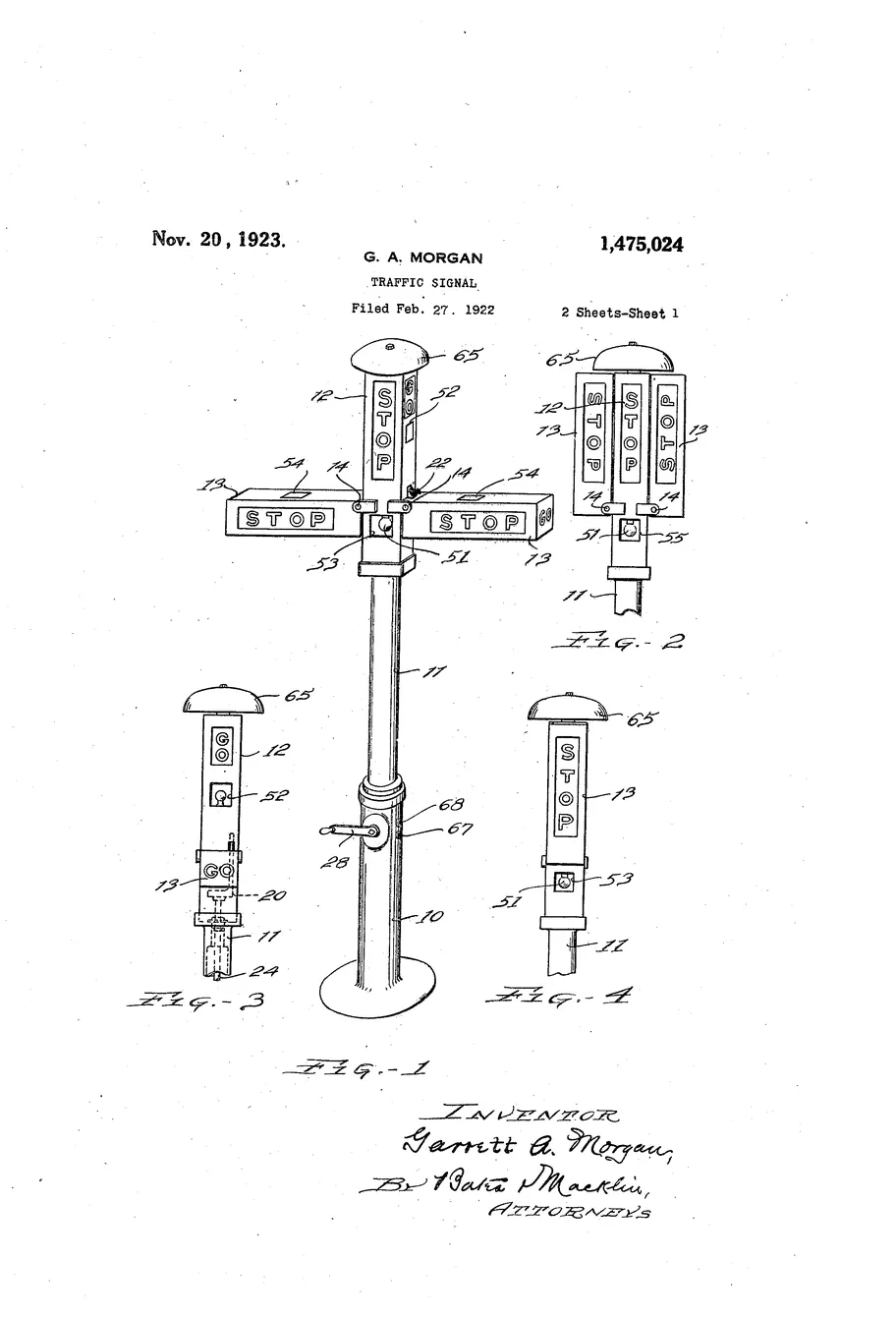
For researchers, the Encyclopedia of Cleveland History lists finding aids at the Western Reserve Historical Society for the Carl Stokes Papers, Scrapbooks and Photographs and for the Stokes Oral History Collection. Cleveland’s Black press is another place to look, including the Call & Post, whose predecessor, the Cleveland Call, was founded by a group that included Garrett Morgan.
Why do Carl and Louis Stokes matter now?
The Stokes brothers’ story connects the Great Migration, public housing, civil rights law and national politics through one Cleveland family. It shows how a redistricting lawsuit and a coalition of Black and white voters opened elected office to Black Clevelanders, in Cuyahoga County and in Congress.
It is also a reminder to state “firsts” carefully, with the source’s own words. Mays HisToracle Consulting helps schools, nonprofits and community institutions research and present local political history through historical research, public talks and curriculum development.
Questions people ask
Was Carl Stokes the first Black mayor of a major American city?
The Encyclopedia of Cleveland History says Carl B. Stokes became “the first African-American mayor of a major U.S. city” when Cleveland elected him in November 1967. The U.S. House of Representatives’ history office words it more cautiously, calling him “one of the first African Americans to lead a major U.S. city.” Citing the source’s exact wording is the safest way to state the claim.
How long did Louis Stokes serve in Congress?
Louis Stokes served 30 years in the U.S. House of Representatives, from January 3, 1969, to January 3, 1999, winning 15 consecutive terms. He was Ohio’s first African American member of Congress, the first Black member of the House Appropriations Committee and a founding member of the Congressional Black Caucus, which he chaired.
Where did Carl and Louis Stokes grow up?
The brothers grew up in Cleveland, raised by their mother after their father died when they were small. The Encyclopedia of Cleveland History says the family lived in Outhwaite, which it calls Cleveland’s first federally funded housing project for the poor. Outhwaite was one of three Cleveland projects, with Cedar-Central and Lakeview Terrace, built with federal financing between 1935 and 1937.
What in Cleveland is named for Carl and Louis Stokes?
The federal courthouse at 801 West Superior Avenue is the Carl B. Stokes U.S. Courthouse. A 2015 U.S. Senate resolution lists Cleveland landmarks named for Louis Stokes, including the Louis Stokes Wing of the Cleveland Public Library, the Louis Stokes Health Sciences Center at Case Western Reserve University and the Louis Stokes Cleveland Veterans Affairs Medical Center.
Sources
- Stokes, Carl B., Encyclopedia of Cleveland History, Case Western Reserve University.
- Mayoral Administration of Carl B. Stokes, Encyclopedia of Cleveland History, Case Western Reserve University.
- Stokes, Louis, Encyclopedia of Cleveland History, Case Western Reserve University.
- Glenville Shootout, Encyclopedia of Cleveland History, Case Western Reserve University.
- Public Housing, Encyclopedia of Cleveland History, Case Western Reserve University.
- STOKES, Louis, History, Art & Archives, U.S. House of Representatives.
- The Congressional Black Caucus, History, Art & Archives, U.S. House of Representatives.
- Report of the Select Committee on Assassinations: Introduction, National Archives.
- S. Res. 265, Honoring the Life of Louis Stokes, Congressional Record, September 22, 2015, Congress.gov.
- Amended Prospectus, Alteration: Carl B. Stokes U.S. Courthouse, Cleveland, OH (FY 2025), U.S. General Services Administration.